Tokenomics is the study of a crypto token's economic design — how it is supplied, how it is distributed, what it is used for, and why people choose to hold or use it. This guide walks through its core dimensions.
Supply: three key numbers
Token supply usually has three figures: circulating supply (the amount tradeable now), total supply (all tokens that currently exist), and max supply (the theoretical ceiling that can ever be created) [1]. Together they help you judge scarcity and potential dilution.
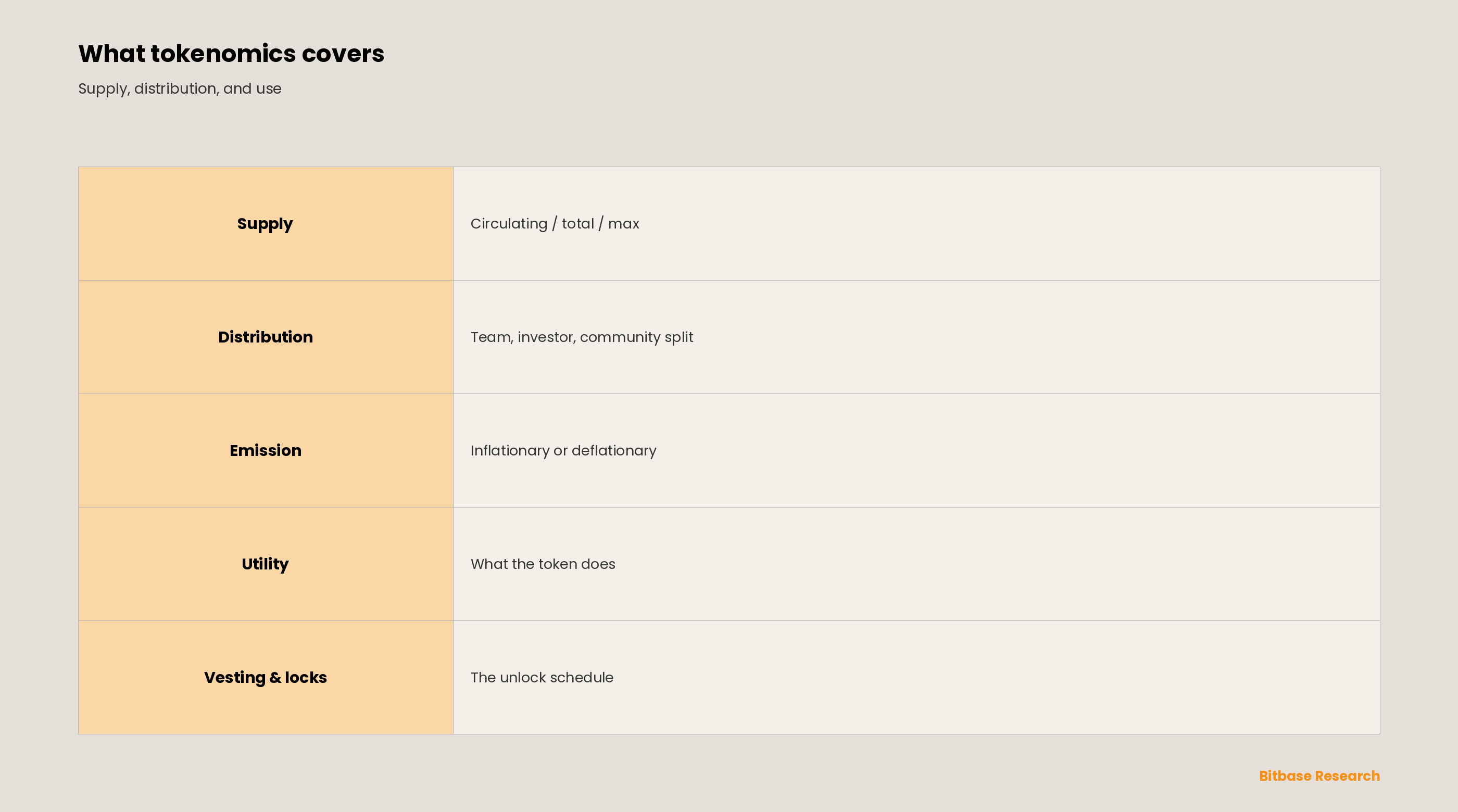
What tokenomics covers
A token's economic design has five dimensions: supply, distribution, emission, utility, and vesting and locks. Supply is the circulating, total, and max figures. Distribution and vesting cover who holds the tokens and how much is locked or still vesting, while utility is what the token does and why anyone holds it.
Why it matters
Good tokenomics shows how a token is distributed to the community, how much is locked or vesting, and whether holdings are concentrated among the team or early investors [2]. These design choices shape the token's supply and demand, and its long-term sustainability.
The bottom line
Tokenomics studies a token's supply, distribution, emission, and utility. Reading it helps you assess a project more fully, not just by price. To keep learning the fundamentals, follow more from Bitbase Academy.
Related reading
Other Bitbase articles on this topic:
- Token Velocity, Demand Sinks and Supply Sinks
- What Is a TRC-20 Token? Tron's Token Standard
- Token Contract Red Flags
Disclaimer: This article is educational content from Bitbase Academy, provided for information only. It does not constitute investment, trading, tax, or financial advice. Written as of June 2026; refer to the latest official information.
References
[1] CoinMarketCap, "What Is Tokenomics?" coinmarketcap.com
[2] Coinbase, "Tokenomics 101." coinbase.com