Slippage is the difference between the price you expect on a trade and the price at which it actually executes. It is common in crypto, driven mostly by volatility and thin liquidity, and can work for or against you. This guide explains it.
How slippage happens
Slippage occurs when the market price moves between the moment you place an order and the moment it actually fills [1]. Negative slippage means a worse price than expected (you intended to buy at $50 but filled at $52); positive slippage means a better price (filled at $48). Both come from price movement in that short window [2].
Why it happens
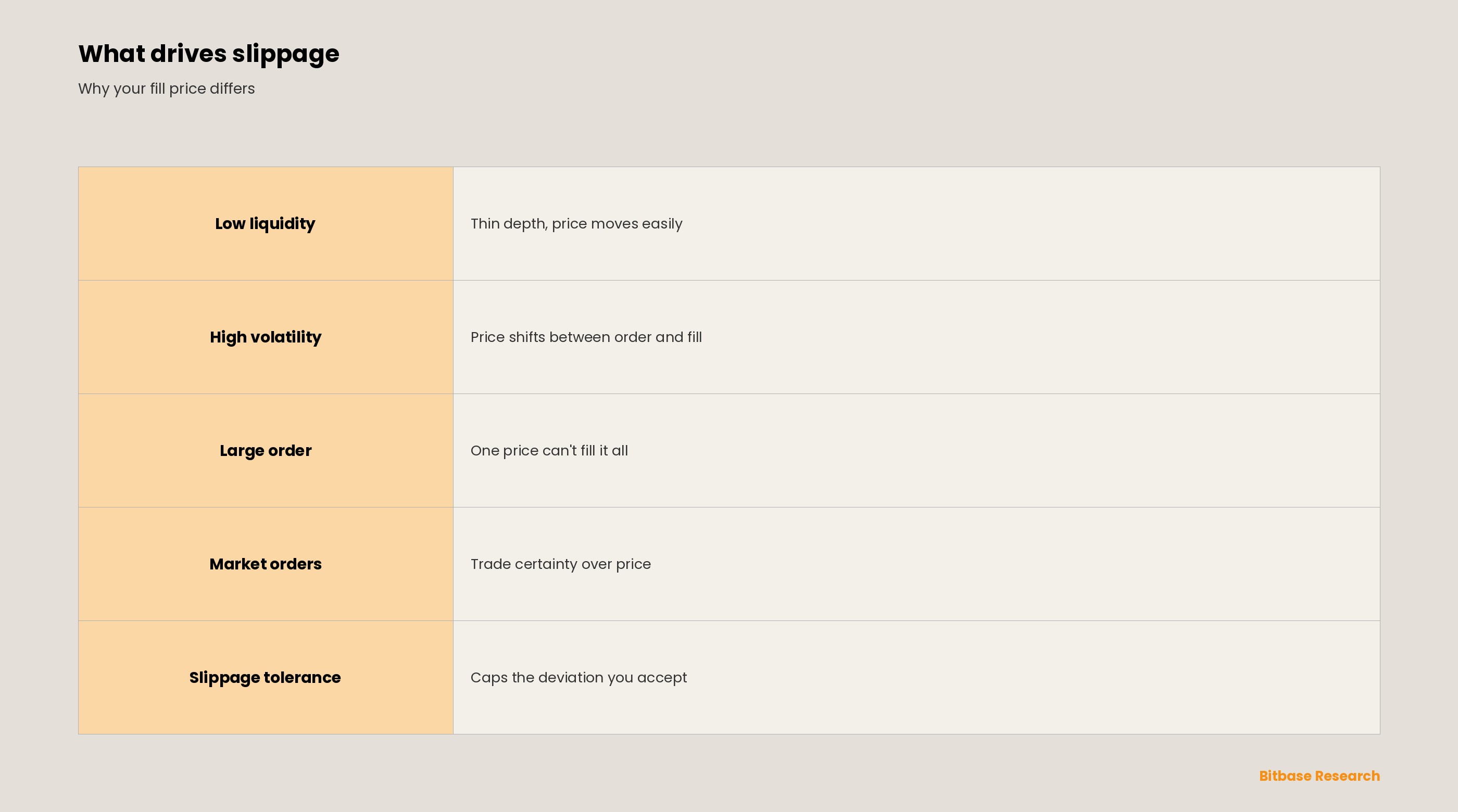
The market cannot always absorb your order at the price you saw. Thin liquidity leaves little available at that price, sharp volatility moves the market while the order is still in flight, and a large order asks for more than that price can supply. Market orders take whatever price is available, so the slippage tolerance you set is what caps the deviation.
How to reduce slippage
Trade pairs with deep liquidity, avoid large market orders during sharp volatility, split big orders when needed, and set a sensible "slippage tolerance" to cap the price deviation you'll accept. Many trading interfaces let you customize this limit per trade.
The bottom line
Slippage is the gap between your expected and executed price, shaped by volatility, liquidity, and order size. Understanding its causes and using slippage tolerance helps you control your fills. To keep learning the fundamentals, follow more from Bitbase Academy.
Related reading
Other Bitbase articles on this topic:
- Bracket and Conditional Orders: MIT and LIT Explained
- The Crypto Spot Order Lifecycle Explained
- Order Book Imbalance, CVD, and Market Impact
Disclaimer: This article is educational content from Bitbase Academy, provided for information only. It does not constitute investment, trading, tax, or financial advice. Written as of June 2026; refer to the latest official information.
References
[1] Kraken, "What is slippage in crypto?" kraken.com
[2] Coinbase, "What is slippage in crypto and how to minimize its impact?" coinbase.com