
A collateralized stablecoin is one whose value is backed by real reserves — assets held so that each coin can be redeemed for the currency it tracks, usually the US dollar. It is the most common and most trusted kind of stablecoin. Here is what “collateralized” means, the main types, how the peg is held, and where the risk lies.
What collateralized means
A stablecoin aims to hold a fixed value, typically $1. A collateralized one does this the simple way: for every coin in circulation, the issuer holds reserves worth at least as much, so the coin is a claim on something real. That backing is what lets holders trust the price and, in principle, redeem the coin for the underlying asset. It is the opposite of an algorithmic stablecoin, which tries to hold its peg with code and little or no reserve.
The main types
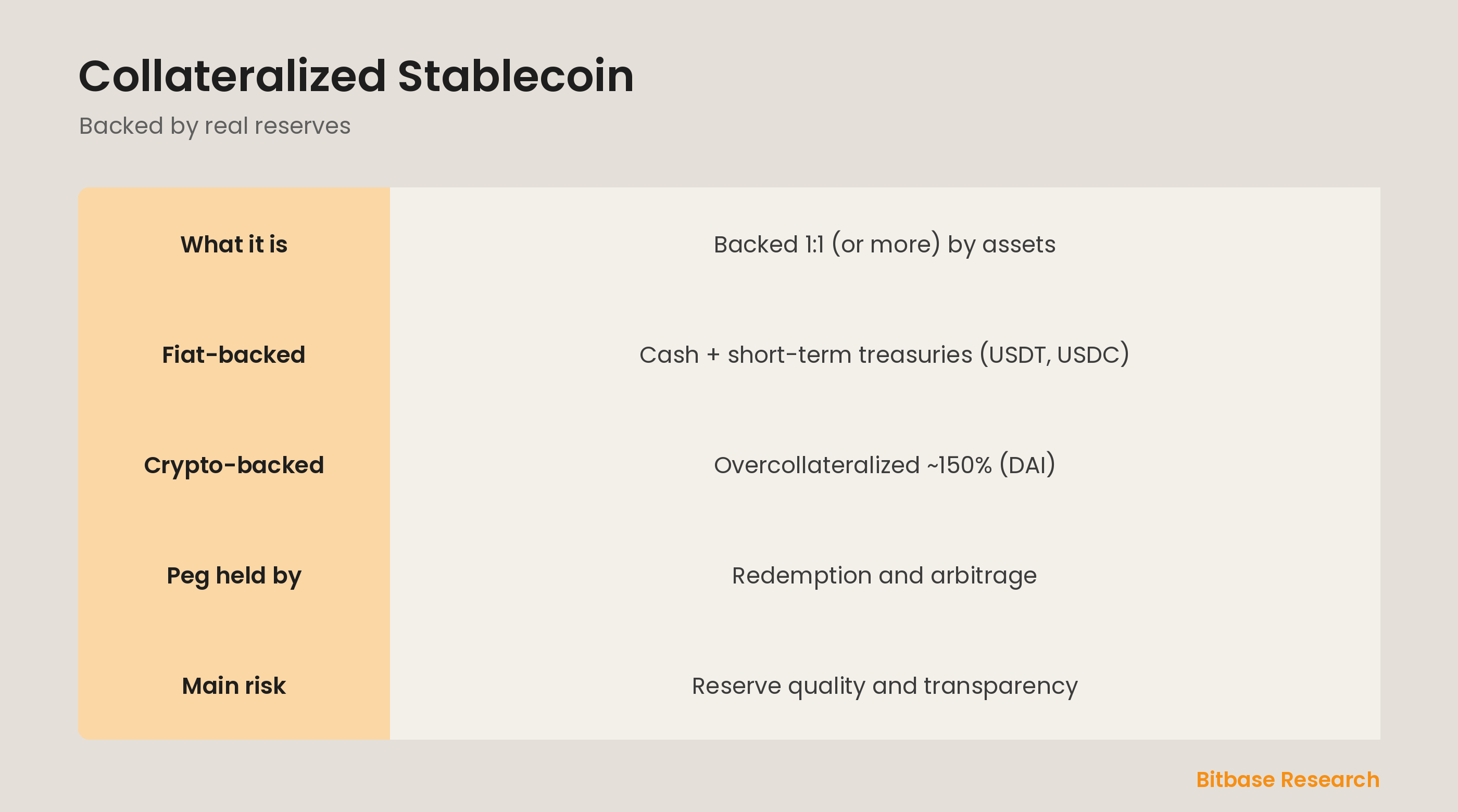
There are three broad kinds. Fiat-collateralized coins such as USDT and USDC are backed by cash and short-dated government treasuries, held roughly one-to-one with the coins issued. Crypto-collateralized coins such as DAI are backed by other cryptocurrencies but overcollateralized — often around 150% — so the reserve can absorb crypto's price swings. Commodity-collateralized coins are backed by an asset like gold. Fiat-backed is by far the largest category.
How the peg holds
The peg is enforced by redemption and arbitrage. If the coin trades below $1, traders can buy it cheaply and redeem it with the issuer for a full dollar of reserves, pocketing the difference — and that buying pushes the price back up. If it trades above $1, new coins can be minted against fresh reserves and sold. This two-way pressure keeps a well-run collateralized stablecoin close to its target most of the time.
Where the risk lies
The backing is only as good as the reserves behind it. The key questions are what the reserves actually hold and whether that is transparently verified, since a coin claiming full backing but holding risky assets can still break. Custodian risk is real too: in March 2023, USDC briefly fell to about $0.87 when part of its reserves was stuck at a failing bank, then recovered once redemptions resumed. Crypto-backed coins carry the extra risk that their collateral itself can crash.
The bottom line
A collateralized stablecoin holds its value the old-fashioned way — with reserves you can redeem against — which is why fiat-backed coins like USDT and USDC dominate everyday crypto. Treat the quality and transparency of those reserves as the thing that matters most, not the label on the coin. Backing you can verify is what separates a dependable stablecoin from a risky one. To keep learning the fundamentals, follow more from Bitbase Academy.
Disclaimer: This article is educational content from Bitbase Academy, provided for information only. It does not constitute investment, trading, tax, or financial advice. Crypto assets are volatile; assess your own risk. Written as of June 2026; refer to the latest official information.
References
[1] Investopedia, "Stablecoin: Definition, How They Work, and Types" investopedia.com
[2] Federal Reserve, "Primary and Secondary Markets for Stablecoins" federalreserve.gov
[3] Corporate Finance Institute, "Stablecoin" corporatefinanceinstitute.com