A blockchain bridge is a tool that connects two different blockchains so assets or data can move between them — for example, using a token from one network on another. This guide explains how bridges work and what to watch out for.
Why bridges exist
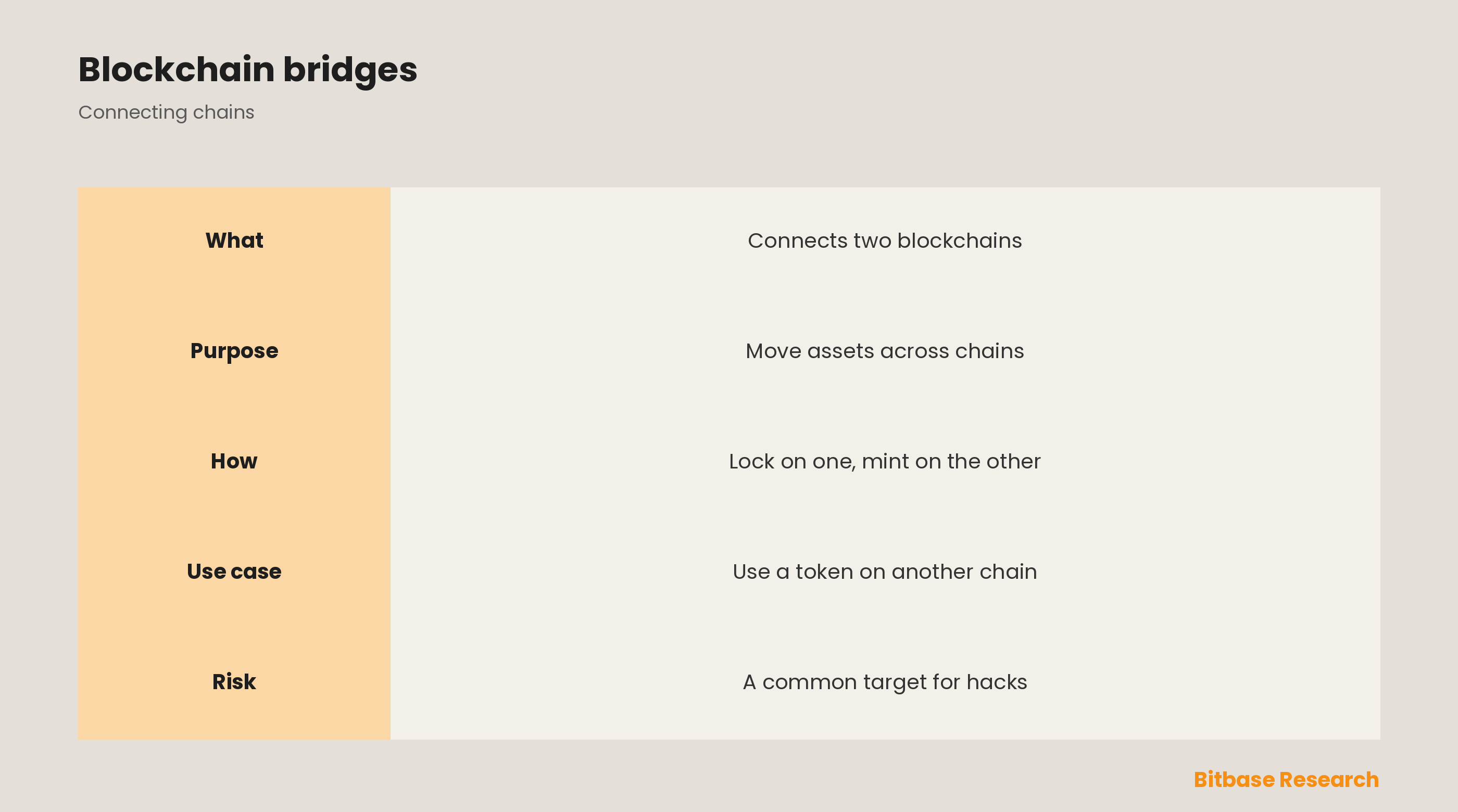
Different blockchains normally can't talk to each other directly. A bridge solves this by linking two networks, letting you move value across them [1]. The most common method locks your asset on the first chain and mints an equivalent "wrapped" token on the second; to move back, the wrapped token is burned and the original is unlocked [2].
How a bridge works
In that most common lock-and-mint method, the original asset stays on the first chain: it is locked there, and what you use on the second chain is the equivalent wrapped token. To go the other way, that wrapped token is burned and the original is unlocked. The funds that stay locked sit with the bridge itself, which is why it matters which bridge you use.
The bottom line
A bridge is the connection that lets assets and information cross between blockchains, making the wider ecosystem more interoperable. It's powerful, but it adds risk: bridges hold locked funds and have been frequent targets for hacks, so use well-established ones and understand the mechanism first. To keep learning the fundamentals, follow more from Bitbase Academy.
Related reading
Other Bitbase articles on this topic:
- Bridge Designs: Lock-and-Mint, Burn-and-Mint and Native Issuance
- What Is Hyperlane? Permissionless Interoperability
- What Is Hemi? A Bitcoin-Ethereum Supernetwork, hVM, hBK, PoP, Tunnels, and HEMI
Disclaimer: This article is educational content from Bitbase Academy, provided for information only. It does not constitute investment, trading, tax, or financial advice. Crypto assets are volatile; assess your own risk. Written as of June 2026; refer to the latest official information.
References
[1] Coinbase, "What is a blockchain bridge?" coinbase.com
[2] Ledger, "What Is a Blockchain Bridge?" ledger.com