
A hot wallet is an online software wallet, handy for everyday trading; a cold wallet is an offline hardware wallet for secure long-term storage. The core difference is whether it's connected to the internet — which shapes the trade-off between convenience and security. This guide compares them.
What a hot wallet is
A hot wallet is software-based and usually kept online, used for day-to-day sending and receiving [1]. It generates and stores your private keys online, which makes transacting direct and convenient — but being online long-term also means a larger attack surface.
What a cold wallet is
A cold wallet is hardware-based and runs offline, used for secure long-term storage [1]. Keeping keys offline makes it less vulnerable to online attacks and gives your crypto a higher level of security — at the cost of being less convenient than a hot wallet [2].
Side by side
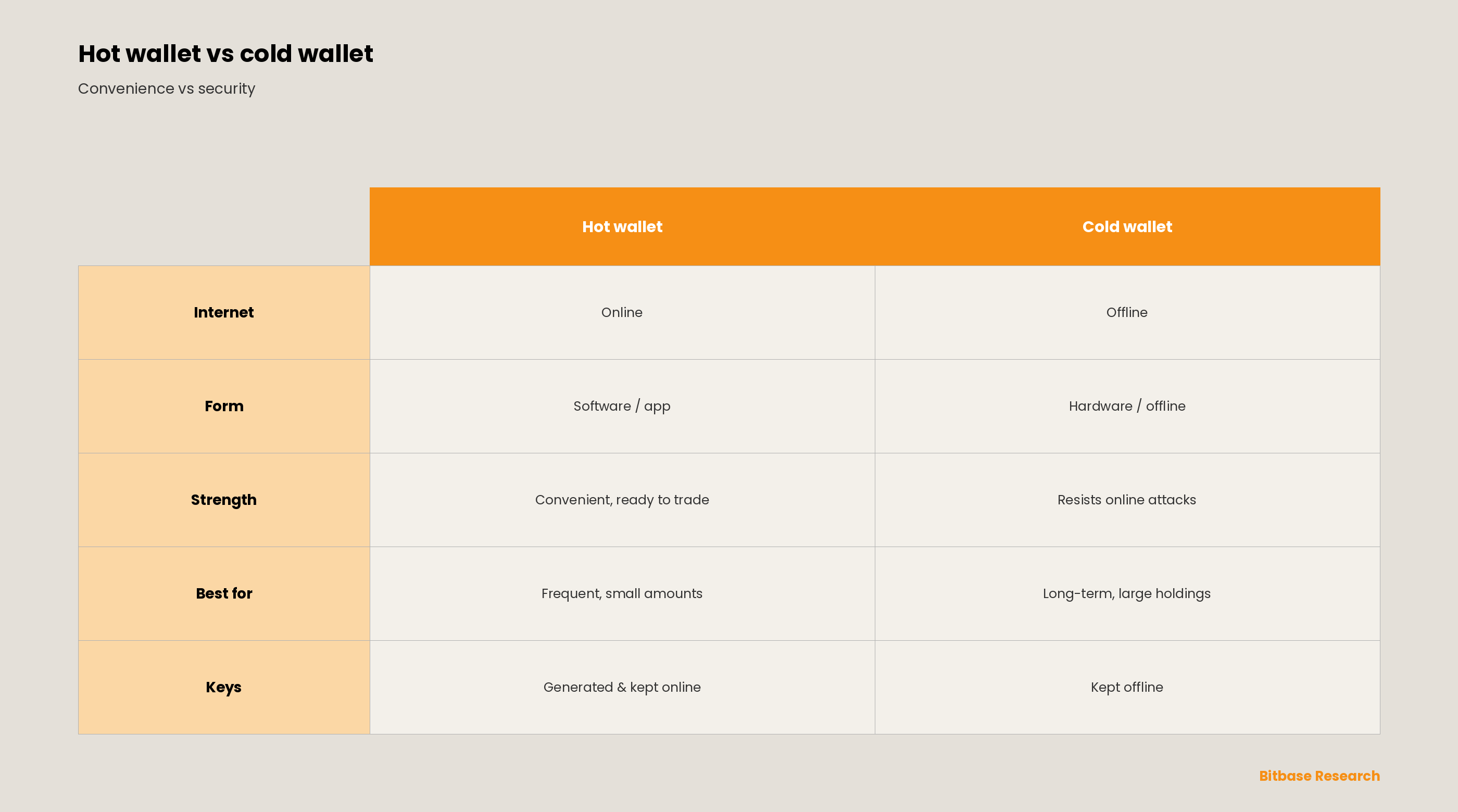
The root difference is whether the wallet is online, and the form, the strength, the best use and the place the keys are kept all follow from it. A hot wallet is software that stays online, strongest on convenience, best for day-to-day sending and receiving, with the private keys held online. A cold wallet is hardware that stays offline, strongest on security, best for long-term storage, with the keys held offline.
How to choose
If you trade often, a hot wallet's convenience fits better; if you want secure, long-term storage of larger holdings, a cold wallet is safer [2]. Many people use both: small amounts in a hot wallet for daily use, larger amounts in a cold wallet for the long haul.
The bottom line
Hot wallets are convenient, cold wallets are secure, and the difference comes down to being online or not. Understanding this trade-off helps you pick the right storage for the job. To keep learning the fundamentals, follow more from Bitbase Academy.
Related reading
Other Bitbase articles on this topic:
Disclaimer: This article is educational content from Bitbase Academy, provided for information only. It does not constitute investment, trading, tax, or financial advice. Written as of June 2026; refer to the latest official information.
References
[1] Coinbase, "Hot vs cold crypto wallet: What's the difference?" coinbase.com
[2] BitGo, "Cold Wallet vs. Hot Wallet: Differences Explained." bitgo.com