The honest answer has two parts: the major blockchains themselves are extremely hard to hack, but the things around them — exchanges, apps, and individual users — are where almost all "crypto hacks" actually happen. Understanding that difference is the key to protecting your funds.
The chain vs everything around it
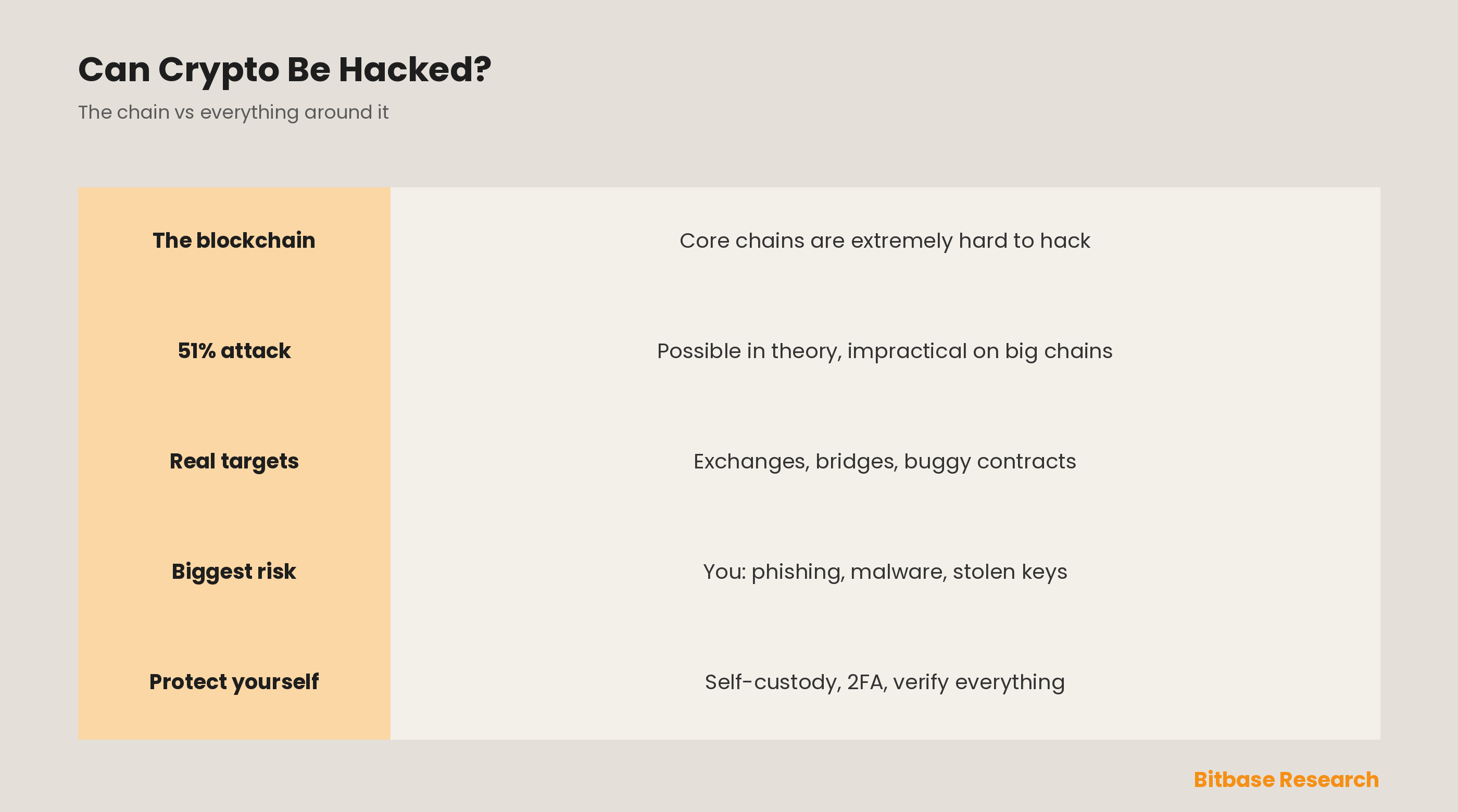
Large blockchains like Bitcoin and Ethereum are secured by thousands of computers and enormous computing power, which makes altering their records practically impossible. A "51% attack" is possible in theory, but on big networks it's far too costly to be practical [1]. What does get hacked are the weaker points around crypto: centralized exchanges, cross-chain bridges, and smart contracts with bugs — plus individual users targeted by phishing, malware, and stolen keys [2].
Where the real risk is
The risk sits in the layers around the chain: the centralized exchange holding your funds, the cross-chain bridge moving them, the smart contract you approve. Each of those is ordinary software written and operated by people, and one bug or one stolen key can empty it while the blockchain underneath keeps recording every transfer as valid. The biggest exposure is the individual user — phishing, malware, and a handed-over password or seed phrase give an attacker access without any of the computing power a 51% attack would need.
The bottom line
So can crypto be hacked? The blockchain itself is one of the hardest things to attack; the real risk lives in custody and human error. Most losses come from trusting an insecure platform or being tricked into giving up a password or seed phrase. Protect yourself by using reputable services, moving long-term holdings to self-custody, turning on two-factor authentication, and verifying every address and link. To keep learning the fundamentals, follow more from Bitbase Academy.
Related reading
Other Bitbase articles on this topic:
- NaoX Protocol, Formerly Naoris Protocol: a Post-Quantum Layer 1 and the NAORIS Token
- How to Spot a Fake Crypto Website
- What Is a Pump and Dump?
Disclaimer: This article is educational content from Bitbase Academy, provided for information only. It does not constitute investment, trading, tax, or financial advice. Crypto assets are volatile; assess your own risk. Written as of June 2026; refer to the latest official information.
References
[1] Coinbase, "What is a blockchain?" coinbase.com
[2] Ledger, "How to keep your crypto safe." ledger.com