A plain stablecoin pays you nothing while the issuer keeps the interest. Yield-bearing and synthetic dollars try to hand that yield back to you. Some do it safely; others chase returns in ways that can break. The differences are worth understanding before you reach for the yield.
What a yield-bearing stablecoin is
A yield-bearing stablecoin passes the income from its backing assets to the token holder. Instead of sitting flat at one dollar, the token slowly grows in value or pays out over time. The idea is simple: put idle dollars to work. How it earns that yield, and how risky the engine is, varies enormously from one design to another.
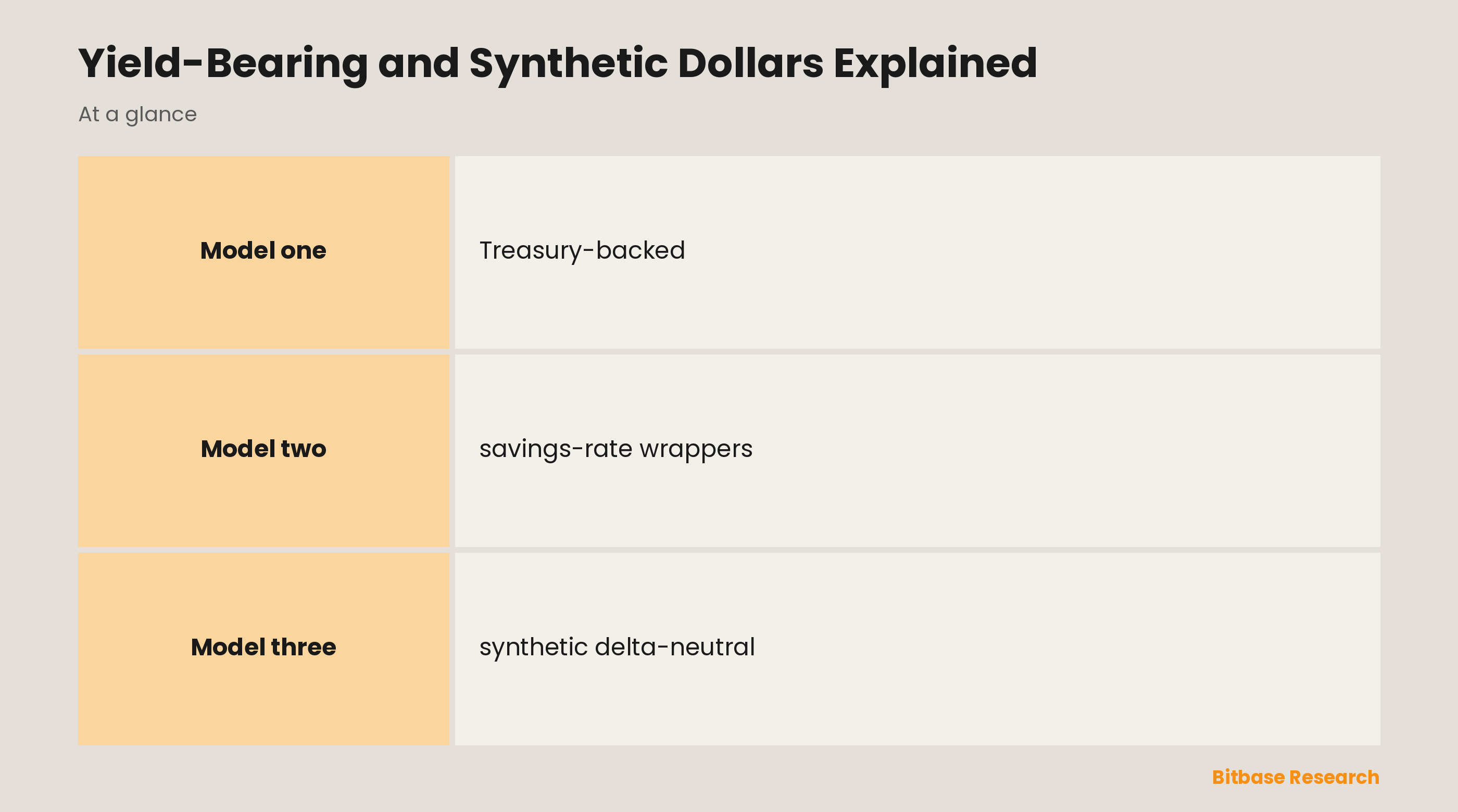
Model one: Treasury-backed
The lowest-risk version holds short-term US Treasuries and passes on the interest. Tokens like USDY and tokenized funds such as BlackRock's BUIDL work this way. The yield is close to the risk-free rate, roughly four to five percent in recent conditions, and the backing is about as safe as crypto dollars get. The main catches are eligibility rules and the trust you place in the issuer and its custodians.
Model two: savings-rate wrappers
A second type wraps a decentralized stablecoin earning a protocol savings rate. sDAI is the best-known example: it represents DAI deposited into a savings mechanism, with a rate set by governance that has hovered around six percent. You can redeem it for the underlying stablecoin plus accrued interest. The added risk here is smart-contract risk and dependence on the protocol keeping the rate sustainable.
Model three: synthetic delta-neutral
The most complex type is the synthetic dollar. Ethena's USDe, for instance, holds crypto collateral and hedges it with short futures positions, aiming to stay near a dollar while collecting yield from funding rates and staking. The returns can be high, but so is the machinery. If funding rates turn negative in a downturn, the yield engine can reverse and eat into the collateral. This is a market strategy in a token wrapper, not a simple savings account.
Where the yield comes from, and the golden rule
Every yield has a source: Treasury interest, a protocol rate, or a trading strategy. The single most useful habit is to ask where the return actually comes from. Yield that far exceeds the risk-free rate is not free; it reflects a subsidy or a risk that has not surfaced yet. If you cannot explain the source, treat the yield as a warning, not a gift.
The risks to weigh
Across all models the main dangers are depeg, smart-contract failure, and counterparty or protocol collapse, plus, for synthetic dollars, the yield turning negative. Depegs in these tokens can be reflexive, feeding on themselves once they start. Treasury-backed versions are the tamest; high-yield synthetic ones carry the most moving parts. None are risk-free.
A regulatory note
Rules are tightening the line between a stablecoin and a yield product. The US GENIUS Act bars payment stablecoins from paying yield directly to holders, which pushes yield into these separate, clearly labeled tokens. That separation is useful: it reminds you that earning a return means stepping out of the plain-stablecoin safety zone and into something with more risk.
The bottom line
Yield-bearing dollars can be a sensible way to earn on stable balances, especially the Treasury-backed kind, but the label hides very different machines. Match the model to your risk tolerance, always trace the yield to its source, and never assume a higher number is simply a better deal.
Disclaimer: This article is educational content from Bitbase Academy, provided for information only. It does not constitute investment, trading, tax, or financial advice. Written as of July 2026; refer to the latest official information.
References
[1] Coinpaprika, "Yield-Bearing Stablecoins: How USDY, sDAI and USDe Work" coinpaprika.com
[2] Spark, "Yield-Bearing Stablecoins: How They Work and Their Risks" spark.money