The scariest crypto thefts do not break your wallet — they trick you into signing your funds away yourself. Wallet drainers and signature scams have become the dominant way people lose crypto, precisely because no hacking is involved. Learning how they work is your best defense.
Why signature scams work
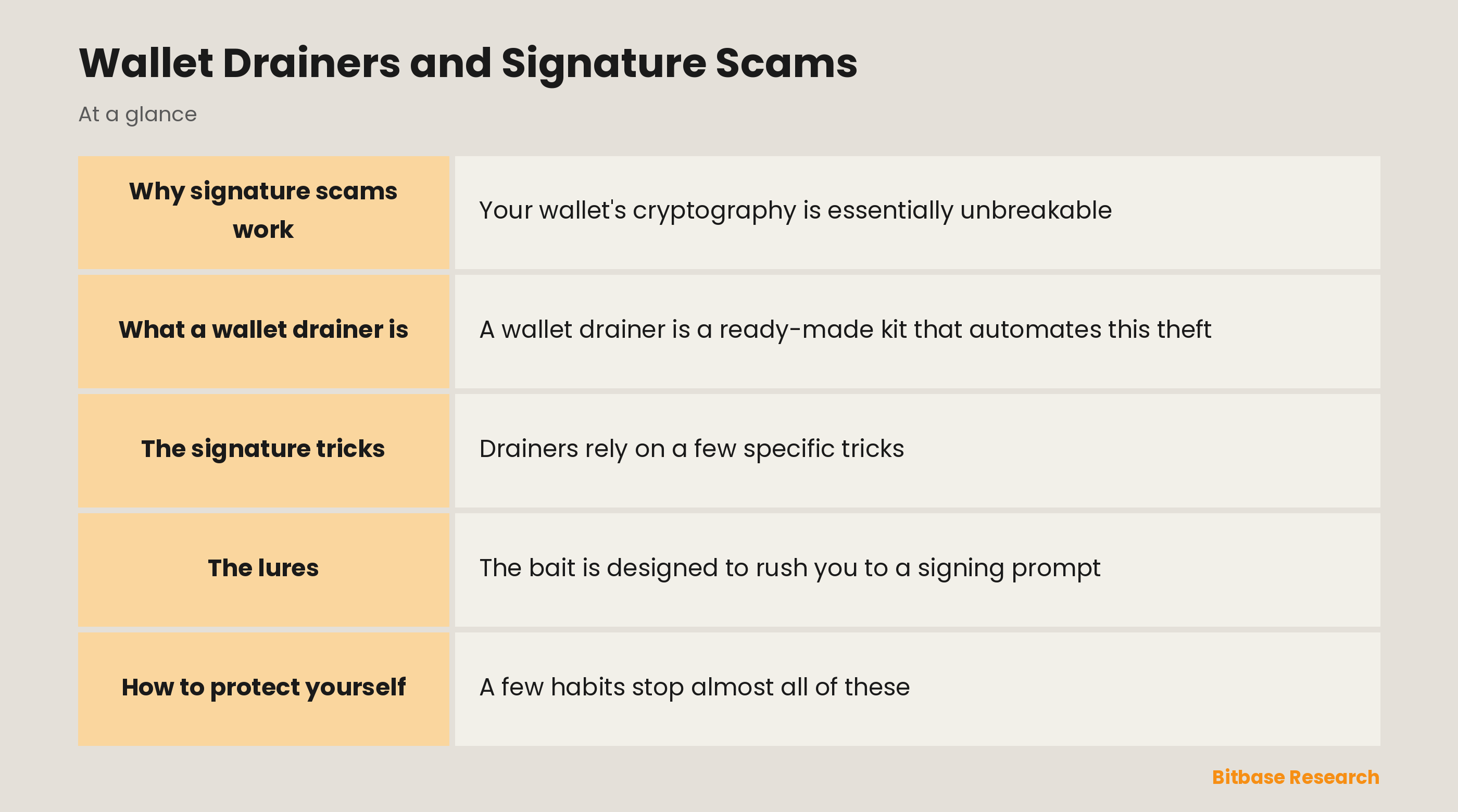
Your wallet's cryptography is essentially unbreakable, so attackers do not try to crack it. Instead, they aim at the one part they can influence: you. If they can convince you to approve a malicious transaction or sign a malicious message, they do not need your keys — you hand over access willingly. Nothing was hacked; you signed, and on a blockchain a signature is final.
What a wallet drainer is
A wallet drainer is a ready-made kit that automates this theft. Once you sign the thing it puts in front of you, the drainer instantly sweeps out your tokens and NFTs, often batching everything into one transaction so your wallet empties in seconds. These kits are an industrialized, billion-dollar business, sold to scammers who deploy them across fake websites, phishing links, and paid ads.
The signature tricks
Drainers rely on a few specific tricks. One is a malicious token approval that grants a scammer's contract permission to spend your tokens. Another is an off-chain "permit" signature — a gasless message that authorizes spending without an obvious transaction, making it easy to miss. The most dangerous is a blind signature, a raw message request that hides what you are actually authorizing behind unreadable data.
The lures
The bait is designed to rush you to a signing prompt. Common hooks include fake airdrops promising free tokens, cloned versions of real apps, "claim" or "mint" pages, urgent direct messages, and malicious ads that appear at the top of search results above the genuine site. Every one funnels you toward the same moment: a request to sign, framed to make you click before you think.
How to protect yourself
A few habits stop almost all of these. Never sign from a link you did not seek out yourself, and always read what a prompt is asking — an unexpected "approve" or "permit" for your tokens is a red flag. Use a wallet that decodes and warns about risky signatures, bookmark the real addresses of apps you use, revoke old approvals periodically, and consider keeping most funds in a separate wallet from the one you connect to new sites.
The bottom line
Wallet drainers and signature scams weaponize your own signature, which is why they bypass otherwise perfect security. Your safety rests entirely on what you agree to sign, so slow down at every prompt, verify both the site and the exact request, and treat any unexpected signing request as hostile until you have proven it is not. In crypto, the click you make yourself is the one to fear most.
Disclaimer: This article is educational content from Bitbase Academy, provided for informational purposes only. It is not investment, trading, tax, or financial advice. Written as of July 2026; rely on the latest official information.
References
[1] ScamSniffer, "Wallet drainers and approval phishing report" scamsniffer.io
[2] MetaMask, "How to avoid signature phishing scams" metamask.io