Stablecoin issuers run one of the simplest and most profitable businesses in finance. You hand them a dollar, they give you a token, and they keep the interest the dollar earns. Understanding that trade explains almost everything about the industry.
The core business model
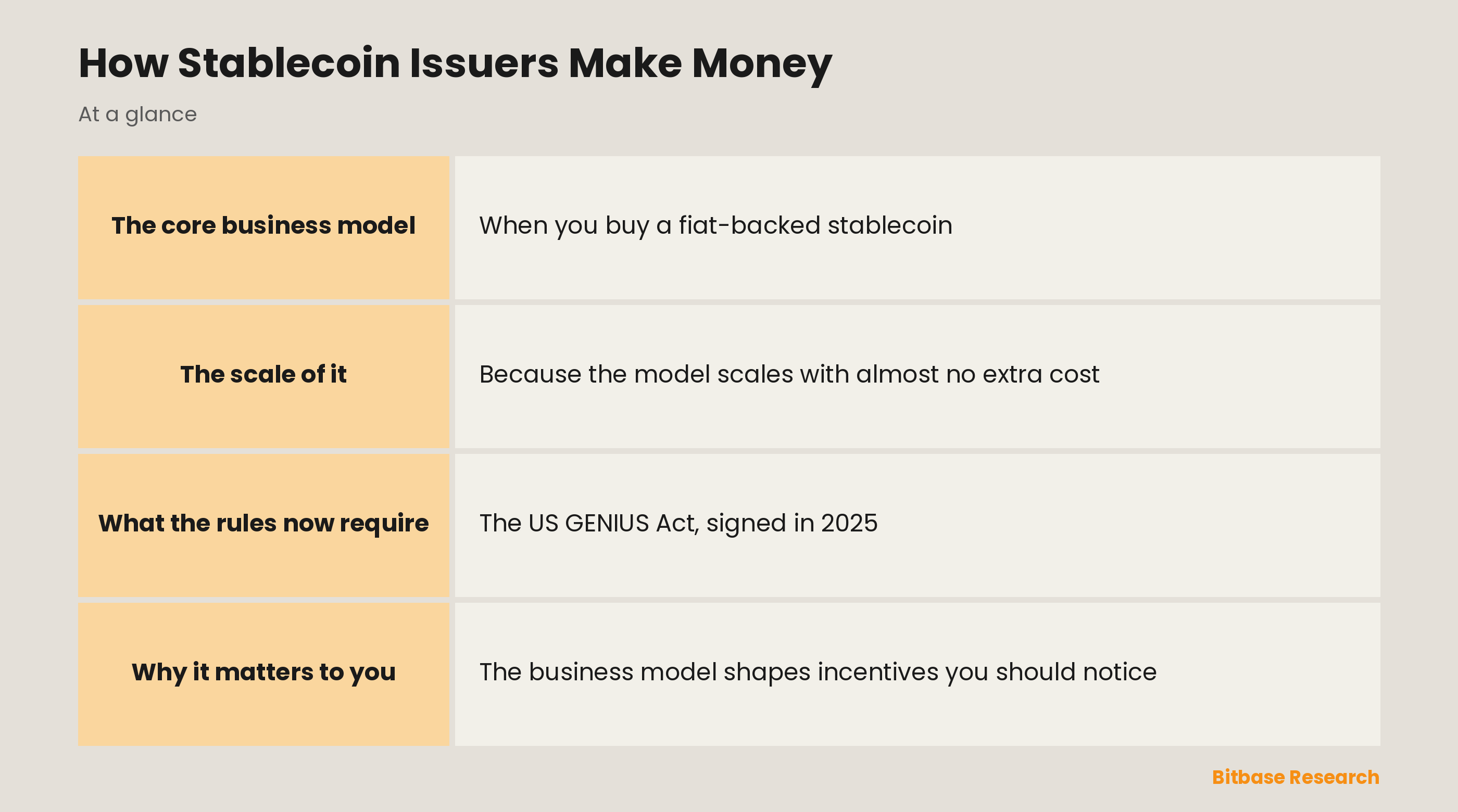
When you buy a fiat-backed stablecoin, the issuer takes your dollar and holds it in reserve, mostly in short-term US Treasuries and cash. Those reserves earn interest at prevailing rates. You, the token holder, earn nothing on a plain stablecoin. The gap between the interest the reserves earn and the zero paid to holders is the issuer's revenue. On hundreds of billions of dollars, even a few percent is enormous.
The scale of it
Because the model scales with almost no extra cost, the largest issuers have become highly profitable. Tether, which issues USDT, has reported profits rivaling major banks despite a tiny headcount, driven almost entirely by the yield on its Treasury holdings. Circle, the issuer of USDC, runs the same way, sharing part of that yield with distribution partners. This is why stablecoin issuers have become some of the biggest private buyers of US government debt.
What the rules now require
The US GENIUS Act, signed in 2025, locks this model in place while tightening it. Payment stablecoins must hold full reserves in cash and short-term Treasuries and cannot pay yield directly to holders. That last point matters: it keeps the interest with the issuer and pushes anyone wanting yield toward separate, clearly labeled products rather than the base stablecoin.
Why it matters to you
The business model shapes incentives you should notice. Issuers are motivated to grow supply, because more tokens mean more reserves and more interest. They are also exposed to interest rates: their profits shrink when rates fall. And since you earn nothing by holding, a large idle stablecoin balance is essentially an interest-free loan to the issuer. That is fine for spending money you need liquid, but worth knowing when you decide how much to hold.
The bottom line
A stablecoin issuer is, at heart, a money manager that keeps the yield. The product is stability and convenience; the profit is the interest on your dollar. Knowing that helps you read the industry clearly and decide whether a plain stablecoin, or a yield-bearing alternative, fits what you are trying to do.
Disclaimer: This article is educational content from Bitbase Academy, provided for information only. It does not constitute investment, trading, tax, or financial advice. Written as of July 2026; refer to the latest official information.
References
[1] Congress.gov, "GENIUS Act (S.1582)" congress.gov
[2] CoinLaw, "Stablecoin Market Cap Statistics 2026" coinlaw.io