Staking SOL is simple to do and pays more than most large chains, but the higher yield comes with its own mechanics. Understanding inflation, commission, and MEV shows you what you actually earn.
How staking SOL works
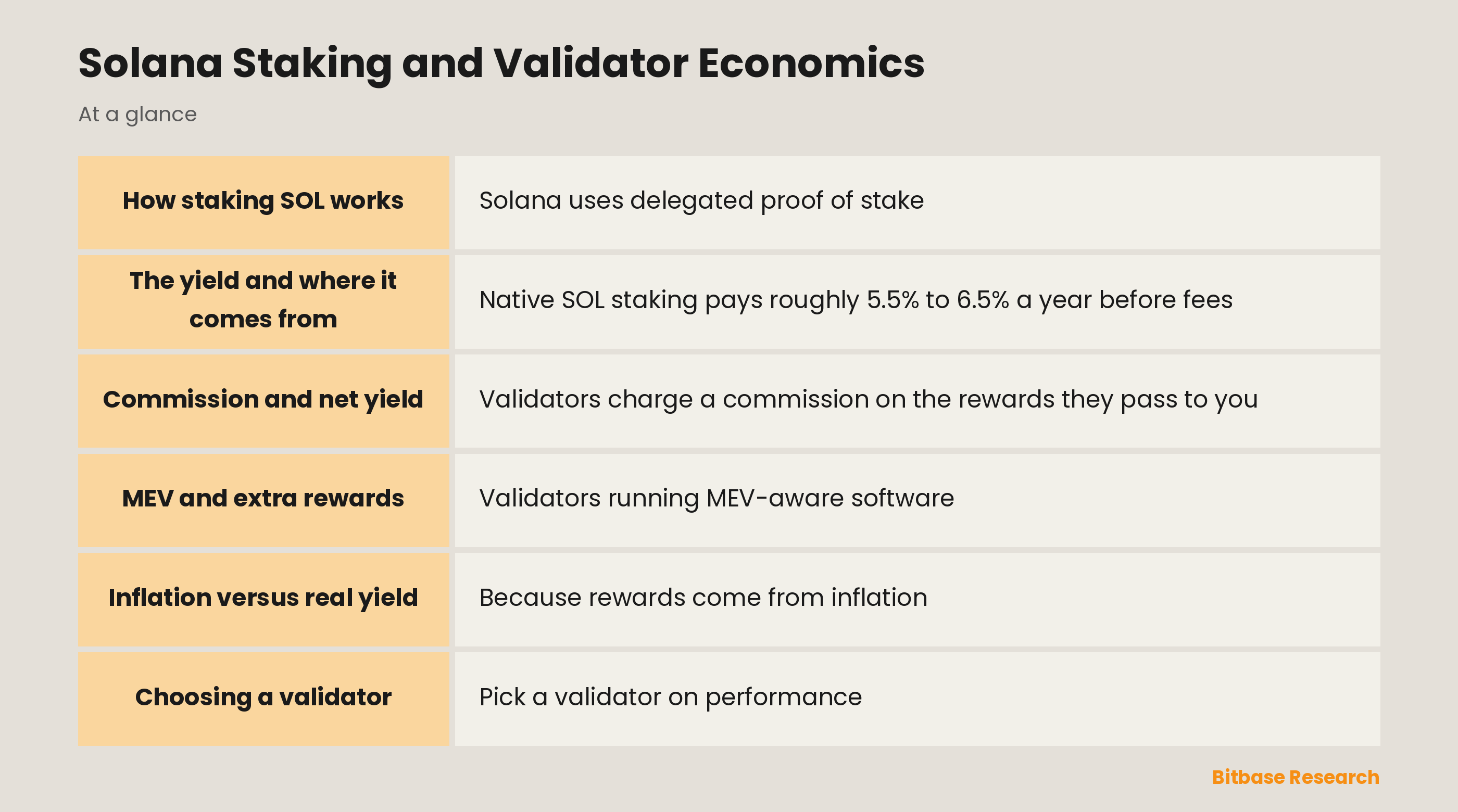
Solana uses delegated proof of stake. You keep your SOL and delegate it to a validator, who runs the node and produces blocks; you share in the rewards. Your tokens are never sent to the validator, only assigned to it, and you can redelegate or unstake when you choose. There is no minimum, which makes it accessible to almost anyone.
The yield and where it comes from
Native SOL staking pays roughly 5.5% to 6.5% a year before fees, higher than Ethereum. The reward comes mainly from Solana's inflation, which mints new SOL and distributes it to stakers. That rate started at 8% and steps down about 15% each year toward a long-term floor near 1.5%, so today's inflation sits around 4% to 5%.
Commission and net yield
Validators charge a commission on the rewards they pass to you, typically 0% to 10%. A lower commission leaves you more, but the cheapest validator is not always the best; reliability and performance matter more than a point of fee. Your net yield is the gross rate minus that commission.
MEV and extra rewards
Validators running MEV-aware software, such as the Jito client, can capture extra value from transaction ordering and share it with delegators, often adding one to two percentage points. This is why two validators with the same commission can deliver different real returns.
Inflation versus real yield
Because rewards come from inflation, the headline rate overstates your gain. If SOL inflates around 4.5% and you earn about 6%, your real increase in ownership is the difference, not the full 6%. Staking mainly protects you from being diluted by the inflation that pays everyone else.
Choosing a validator
Pick a validator on performance, not just yield: high uptime, a track record of producing blocks, reasonable commission, and ideally MEV sharing. Spreading stake across several good validators also supports Solana's decentralization rather than concentrating it in the largest few.
The bottom line
Solana staking is easy and rewarding, but read past the headline APY. Subtract commission, account for inflation, and weigh MEV, and you will know your true return and pick validators that keep the network healthy while paying you fairly.
Disclaimer: This article is educational content from Bitbase Academy, provided for information only. It does not constitute investment, trading, tax, or financial advice. Written as of July 2026; refer to the latest official information.
References
[1] Datawallet, "Top Solana Staking Statistics and Trends (2026)" datawallet.com
[2] ParaFi Tech, "Solana Tokenomics | Inflation & Supply" parafi.tech