Solana was built around one goal: speed. It aims to feel like the internet — thousands of transactions a second for a fraction of a cent — and mostly delivers. But that ambition has a history of congestion and outages, and a wave of 2026 upgrades is rewriting how fast and reliable it really is.
Built for speed
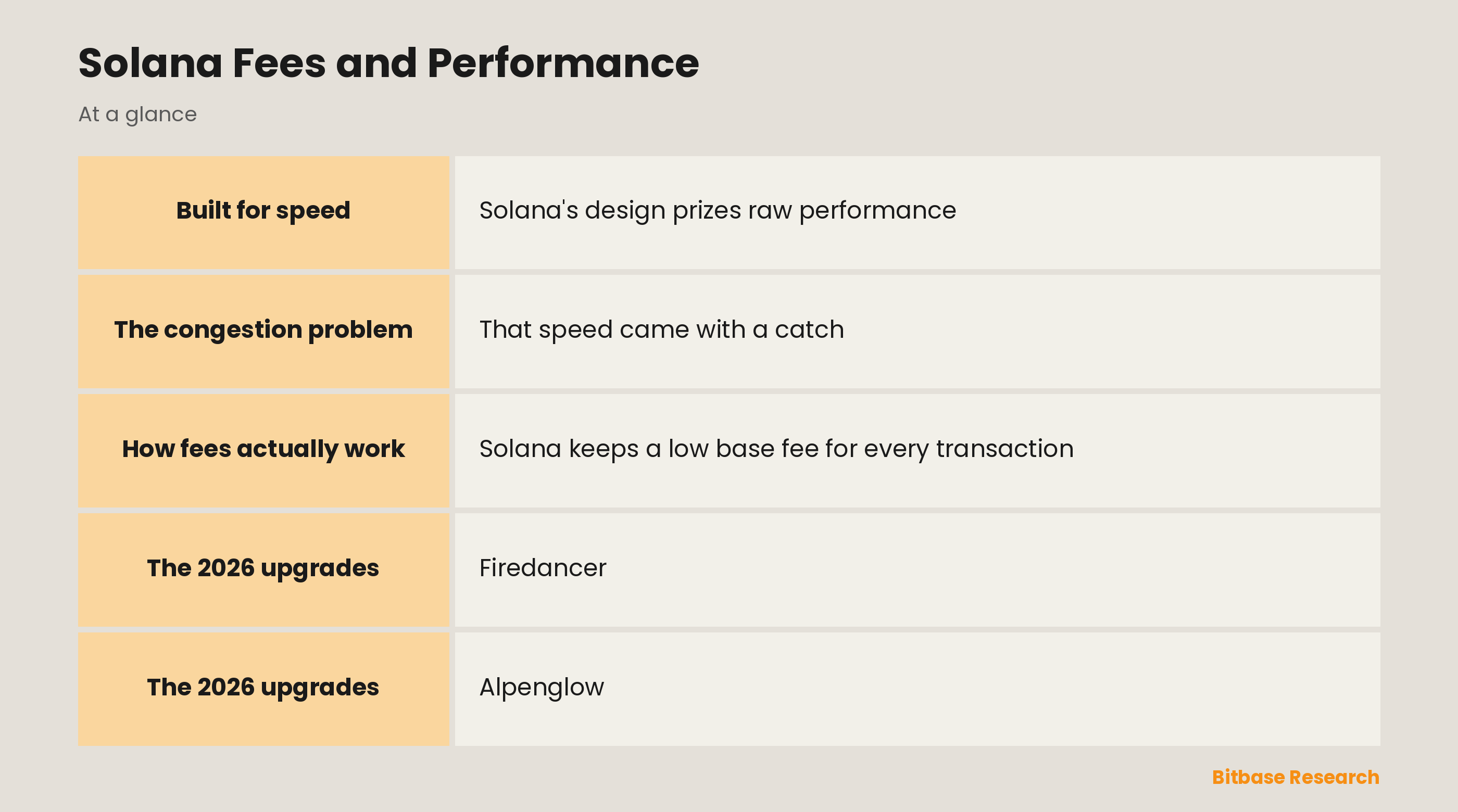
Solana's design prizes raw performance. Historically it used a clever timekeeping trick called Proof of History alongside its consensus to order transactions quickly, targeting block times around 400 milliseconds and, in theory, tens of thousands of transactions per second. Fees are famously tiny — often a fraction of a cent — which is what makes high-frequency uses like trading and gaming practical on Solana.
The congestion problem
That speed came with a catch: when demand spiked, Solana could choke. During popular token launches and NFT mints, floods of transactions — many from bots — overwhelmed the network, causing failed transactions and, on a few notable occasions, full outages where the chain stopped producing blocks. Reliability, not raw speed, became Solana's hardest problem.
How fees actually work
Solana keeps a low base fee for every transaction, then adds an optional priority fee you can pay to be processed sooner when things are busy. Crucially, it uses local fee markets: congestion around one hot account — say, a hyped token — raises fees for that account without making every unrelated transaction expensive. This is a very different model from Ethereum's single, network-wide gas auction.
The 2026 upgrades: Firedancer
The biggest reliability push is Firedancer, a brand-new validator client built by Jump Crypto in C and C++. A second independent client makes the network far more resilient — if one has a bug, the other keeps running — and in tests its networking layer has processed enormous transaction volumes. By 2026 it is live on mainnet, run by a growing share of validators.
The 2026 upgrades: Alpenglow
The other leap is Alpenglow, a new consensus design approved by validators in late 2025. It replaces Solana's older machinery, including the Proof of History role, and slashes time-to-finality from over twelve seconds to roughly 150 milliseconds — near-instant settlement. Together with Firedancer, it pushes Solana toward consistently processing well over 100,000 transactions per second.
The bottom line
Solana trades some decentralization and simplicity for extraordinary speed and near-zero fees, a bet that has made it a home for trading, payments, and meme coins. Its Achilles' heel was reliability under load, and the 2026 Firedancer and Alpenglow upgrades directly target that. If they deliver, Solana moves closer to its original promise: a blockchain fast enough to feel invisible.
Disclaimer: This article is educational content from Bitbase Academy, provided for informational purposes only. It is not investment, trading, tax, or financial advice. Written as of July 2026; rely on the latest official information.
References
[1] Blockdaemon, "Solana in 2026: Technical Roadmap" blockdaemon.com
[2] RPC Fast, "What Is Firedancer? Solana's New Validator Client" rpcfast.com