DeFi is famous for its yields — numbers that dwarf a savings account. But where does that yield actually come from, and is it sustainable or a mirage? Learning to tell real revenue from printed rewards is the single most important skill for surviving DeFi with your capital intact.
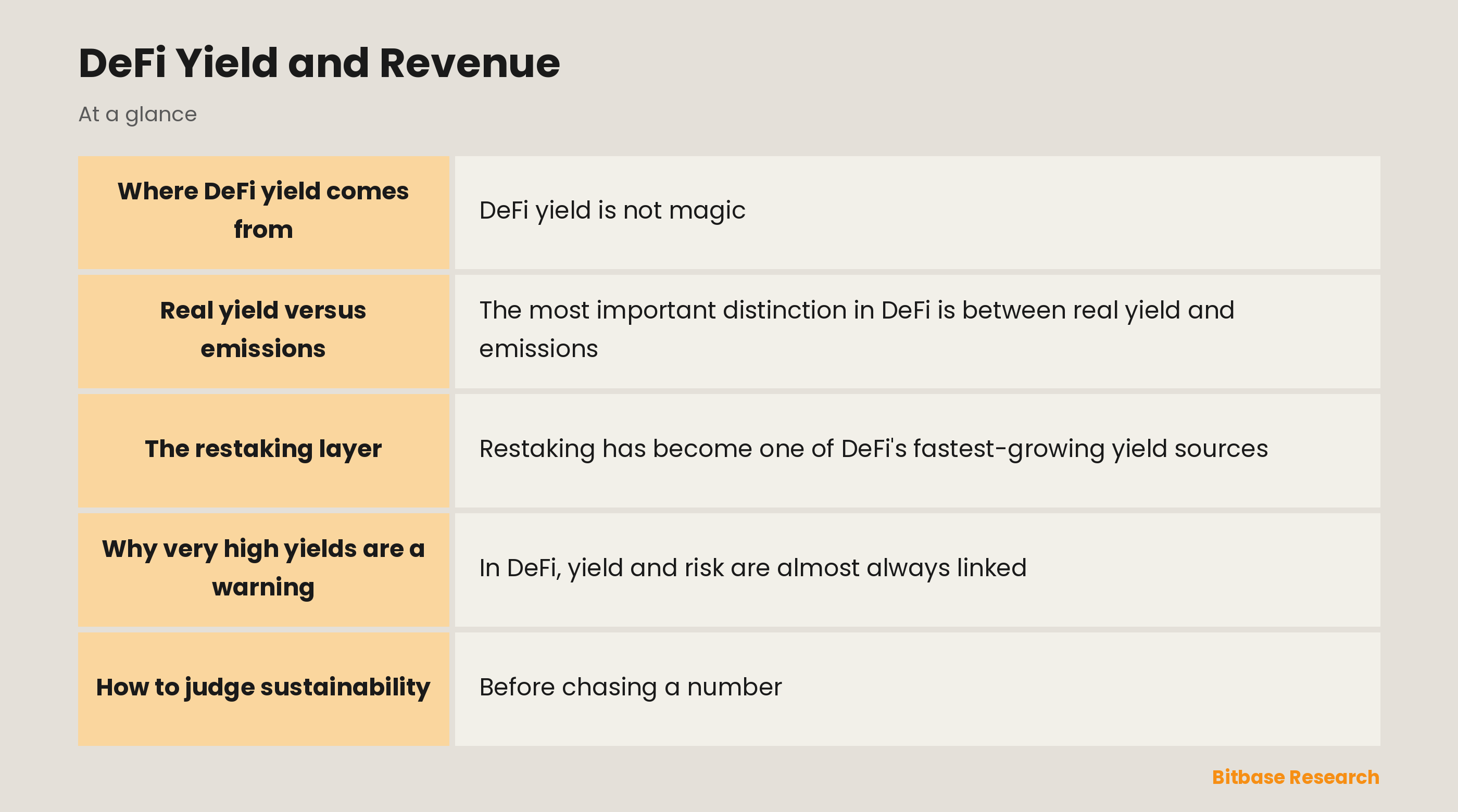
Where DeFi yield comes from
DeFi yield is not magic; it is paid by someone for something. The main sources are interest from borrowers on lending platforms, a share of trading fees for providing liquidity, staking rewards for helping secure a network, and incentives — extra tokens a protocol hands out to attract users. A newer source is restaking, where already-staked assets are reused to secure additional services for extra reward.
Real yield versus emissions
The most important distinction in DeFi is between real yield and emissions. Real yield is paid out of a protocol's actual revenue — the fees its users generate — so it is sustainable as long as people keep using it. Emissions are new tokens printed to reward you, which dilute existing holders and depend entirely on continued demand for the token. A high headline number funded by emissions can evaporate the moment the incentives stop.
The restaking layer
Restaking has become one of DeFi's fastest-growing yield sources, with platforms like EigenLayer attracting tens of billions of dollars. Base restaking returns tend to sit in the mid-single digits, but "liquid restaking tokens" can be looped through lending markets to push effective yields much higher. Every extra layer of yield, though, adds an extra layer of risk — including new slashing conditions and the fragility of recursive leverage.
Why very high yields are a warning
In DeFi, yield and risk are almost always linked. A protocol advertising a triple-digit or higher APY is usually paying it with rapid token emissions, borrowing from its own future, or taking on serious risk somewhere you cannot see. The old rule holds: if you cannot clearly identify who is paying the yield and why, then the yield is probably you — or the people who exit before you.
How to judge sustainability
Before chasing a number, ask where it comes from. Does the protocol earn genuine fees from real activity, like a busy exchange whose trading revenue runs into the hundreds of millions? Or is the yield mostly freshly-minted tokens? Check whether returns depend on recursive leverage, and remember that a modest, real yield from a proven protocol usually beats a spectacular one that cannot last.
The bottom line
DeFi yield can be a genuine reward for useful economic activity or a temporary bribe paid in inflating tokens — and the difference decides whether you keep your money. Favor real yield backed by real revenue, treat eye-watering APYs as red flags rather than opportunities, and always know who is on the other side of your return. In DeFi, sustainable and spectacular are rarely the same thing.
Disclaimer: This article is educational content from Bitbase Academy, provided for informational purposes only. It is not investment, trading, tax, or financial advice. Written as of July 2026; rely on the latest official information.
References
[1] DefiLlama, "DeFi yields and protocol revenue" defillama.com
[2] ChainUp, "Restaking 2026: EigenLayer and yield" chainup.com