In DeFi, you can lend and borrow crypto without a bank, a credit score, or even meeting the other party. It sounds impossible — so how does a protocol let strangers borrow money safely? The answer is collateral, code, and a set of mechanics worth understanding before you deposit a cent.
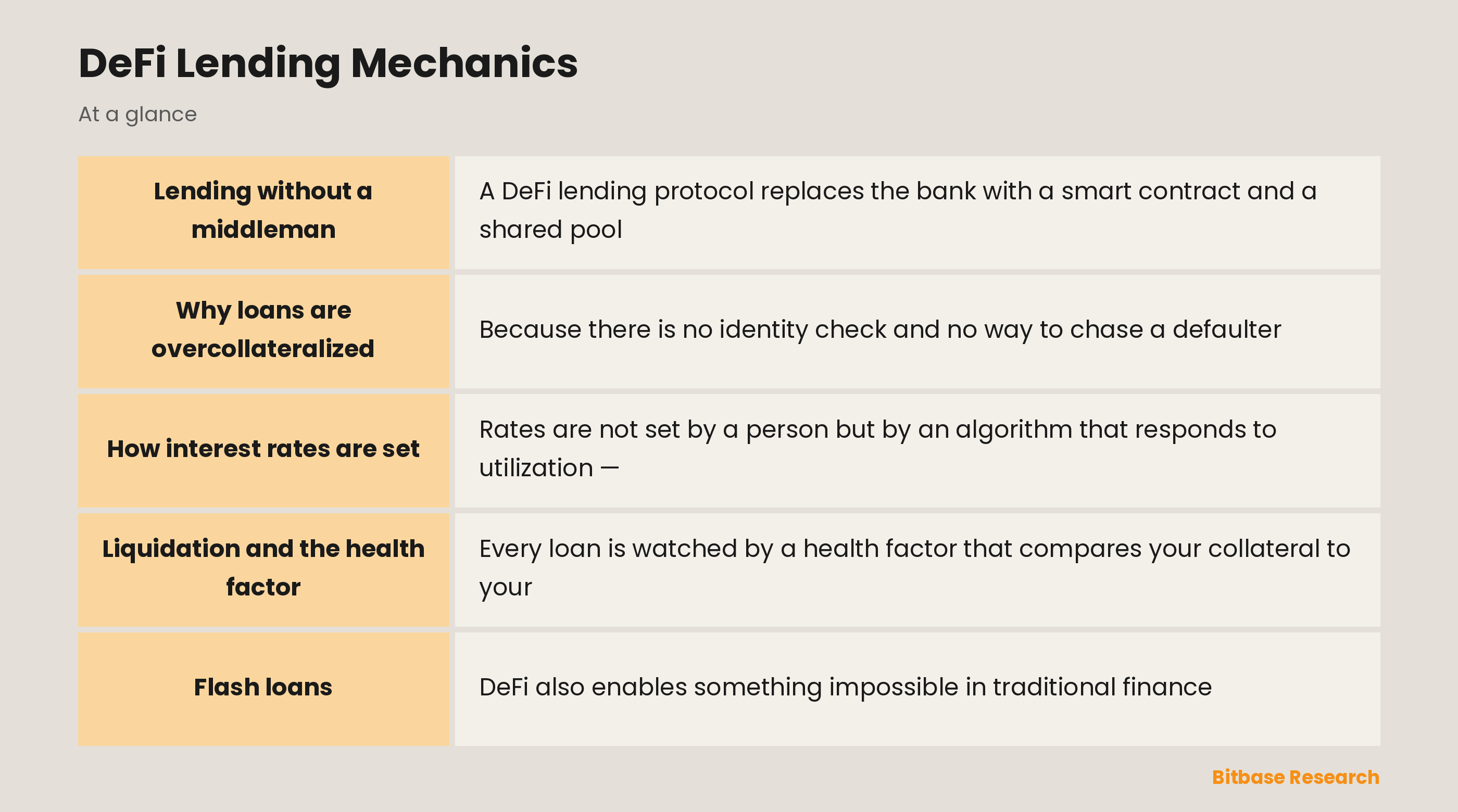
Lending without a middleman
A DeFi lending protocol replaces the bank with a smart contract and a shared pool. Lenders deposit crypto into the pool and earn interest; borrowers take loans out of the same pool and pay interest. No loan officer, no application, no waiting — the contract matches supply and demand automatically, and the largest venues like Aave hold billions in deposits with stablecoin supply rates that typically sit in the low-to-mid single digits.
Why loans are overcollateralized
Because there is no identity check and no way to chase a defaulter, DeFi lending is almost always overcollateralized: you must deposit more value than you borrow. To take out a $70 loan you might lock $100 of collateral. This protects lenders — if a borrower vanishes or their collateral falls in value, the protocol still holds enough to cover the debt. It also means DeFi lending is not for those without assets; it is a tool for borrowing against crypto you already own.
How interest rates are set
Rates are not set by a person but by an algorithm that responds to utilization — how much of the pool is currently borrowed. When lots of people want to borrow and the pool runs low, rates rise to attract more deposits and cool demand; when the pool is mostly idle, rates fall. This is why the yield you earn as a lender constantly shifts, and why borrowing costs spike exactly when everyone wants leverage.
Liquidation and the health factor
Every loan is watched by a health factor that compares your collateral to your debt. If your collateral drops in value — or your debt grows with interest — and that ratio falls below a set threshold, your position is liquidated: the protocol automatically sells your collateral to repay the loan, usually with a penalty. Liquidation is the mechanism that keeps the whole system solvent, and avoiding it means keeping a comfortable buffer, not borrowing right up to the limit.
Flash loans
DeFi also enables something impossible in traditional finance: the flash loan, an uncollateralized loan that must be borrowed and repaid within a single transaction. If it is not repaid by the end of that transaction, the whole thing reverts as if it never happened. Flash loans have legitimate uses like arbitrage and refinancing, but they are also the tool attackers use to fund the price manipulations behind many DeFi exploits.
The bottom line
DeFi lending is powerful and permissionless: deposit to earn algorithmic yield, or borrow against collateral without asking anyone's permission. But the same automation that removes the bank also removes the safety net — variable rates, and above all liquidation, are risks you manage yourself. Understand your health factor, keep a buffer, and never treat a borrowed position as something you can safely ignore.
Disclaimer: This article is educational content from Bitbase Academy, provided for informational purposes only. It is not investment, trading, tax, or financial advice. Written as of July 2026; rely on the latest official information.
References
[1] Aave, "How Aave lending and borrowing works" aave.com
[2] CoinGecko, "DeFi lending and liquidation explained" coingecko.com