The order book in front of you shows one exchange's liquidity, but crypto trades on dozens of venues at once, and even a single book hides some of its true depth. This is liquidity fragmentation, and it means the picture on your screen is partial. Understanding aggregated, cross-exchange, and hidden liquidity helps you judge how much depth really exists and why prices can differ from place to place. Here is how it works.
Liquidity fragmentation
Unlike a single stock exchange, crypto has no central marketplace: the same coin trades on many exchanges simultaneously, and its liquidity is split among them. This is fragmentation. It means no single order book holds all the buyers and sellers; each venue has only its own slice. Fragmentation is why the same asset can show slightly different prices and different depth depending on which platform you look at, and why the true market is bigger than any one book.
Aggregated order books
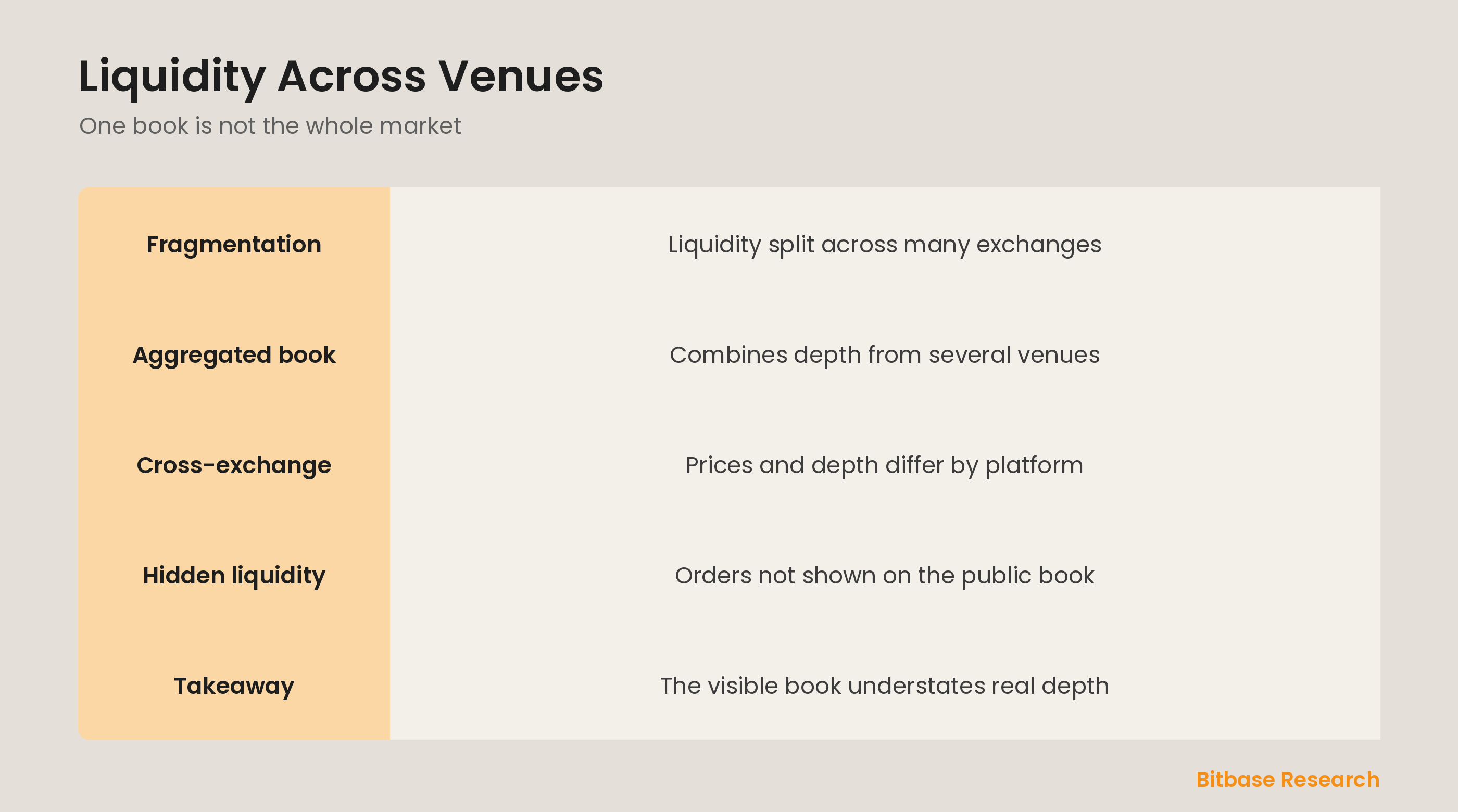
An aggregated order book combines the depth from several exchanges into one view, so you see a fuller picture of where liquidity sits across the market rather than just one venue. Data providers and some trading tools build these by merging feeds. An aggregated book reveals that real depth is often much larger than any single exchange suggests, which matters when you are sizing a large order or judging how strong a support level truly is.
Cross-exchange differences
Because venues are separate, prices and depth vary across them. One exchange may have a slightly higher price or a deeper book than another at the same moment. These gaps create arbitrage opportunities and mean the best execution for a large order might span several platforms. For a regular trader, the practical point is simpler: the price and liquidity you see on your exchange are local, not universal, so a thin book on one venue does not mean the asset is thin everywhere.
Hidden liquidity
On top of fragmentation, not all liquidity on a single exchange is even visible. Hidden and iceberg orders rest on the book without being displayed, and large players often hold size back rather than showing it. This means the public order book usually understates the true depth available: more buyers and sellers may step in than you can see. Treat the visible book as a floor for liquidity, not the full amount, especially near key levels.
The bottom line
Crypto liquidity is fragmented across many exchanges, so no single order book is the whole market. Aggregated books combine venues to reveal fuller depth, cross-exchange differences create price and liquidity gaps, and hidden orders mean even one book shows less than truly exists. The takeaway is to treat the visible book as a partial view: real liquidity is usually deeper and spread wider than the single screen in front of you suggests. To keep learning the fundamentals, follow more from Bitbase Academy.
Disclaimer: This article is educational content from Bitbase Academy, provided for information only. It does not constitute investment, trading, tax, or financial advice. Crypto assets are volatile; assess your own risk. Written as of June 2026; refer to the latest official information.
References
[1] Investopedia, "Liquidity: Definition, Example, and How It Works" investopedia.com
[2] Investopedia, "Order Book: Definition, How It Works, and Key Parts" investopedia.com
[3] Investopedia, "Market Maker: Definition, How They Make Money, and Key Roles" investopedia.com