News Center


Apple Back on Top but Faces a Stress Test at the $5 Trillion Threshold






Why Is Musk Still Doubling Down on Grok Bot Despite Skyrocketing Costs?
This article examines Musk's aggressive promotion of Grok Bot and the three-step AI strategy behind it: infrastructure, models, and applications. SpaceX secures computing power and energy, a partnership with Anthropic counters OpenAI, and the Cursor team builds the Grok Bot app. The article flags concerns including soaring service costs, Grok's lagging model competitiveness, and fierce competition at the application layer, arguing that the next phase of AI agents is the Life Agent covering consumer scenarios. BTC, LINK, and SOL appear only in recommendations and disclaimers, unrelated to the main topic.
3 hours ago

Leaks Suggest Claude Fable 5.5 and GPT 6.2 Astra May Be Launching Soon
Reports of leaked clues point to unreleased AI models from Anthropic and OpenAI. Users say some Claude Opus 5.5 requests were routed to an unreleased Fable 5.5 model, a Mythos 5.5 label appeared in hidden code on Anthropic's website, and a claude-fable-5-5 entry showed up in the LiteLLM catalog. Meanwhile, OpenAI's gpt-6.2-astra surfaced in Codex usage data for some accounts. These rumors rest on demos, catalog entries, and website labels, none officially confirmed, and the traces were quickly removed. The article also touches on Anthropic's IPO progress and its model release history.
2026-11-02
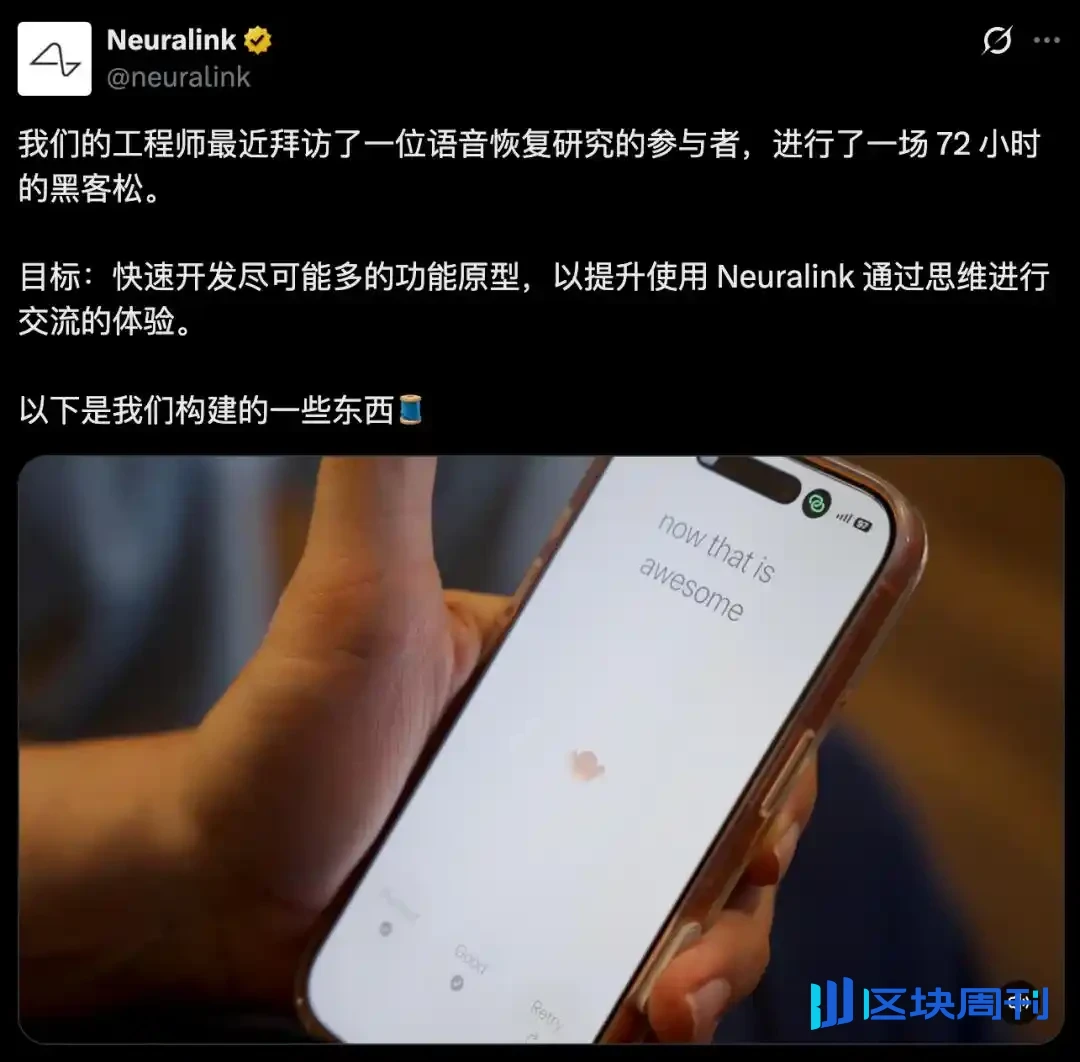
Musk's Neuralink Just Got a Major Upgrade: Grok Plugged Into the Brain, Letting You Control AI With Your Thoughts
Neuralink's latest breakthrough: over a 72-hour hackathon, Musk's team built eight new capabilities that let ALS patient Kenneth use his thoughts to trigger the Grok agent to operate a computer autonomously. With the Bloom app and a system-level brain-computer input method, he can order coffee, send messages, and make calls just by thinking. The brain is becoming AI's native input, and thought-driven agents could dramatically expand neural bandwidth, reshaping human-computer interaction.
2026-10-31

NEAR Protocol Launches Confidential Pre-IPO Futures for AI Giant Anthropic
NEAR Protocol has announced the launch of confidential Pre-IPO perpetual futures for AI startup Anthropic on the near.com platform, trading under the ticker ANT and built on the Hyperliquid blockchain. Traders can use up to 10x leverage, and position structures are not publicly disclosed. The launch comes as Anthropic files its S-1 with the SEC ahead of a planned Nasdaq listing, with the filing revealing revenue growth from $41 million in 2023 to $4.6 billion in 2025. The ANT contract is currently trading around $115, though price fragmentation exists across different liquidity pools.
 NEARPerpetual FuturesPre-IPO FuturesNEAR Protocol
2026-10-27
130% Surge in Near Protocol (NEAR) Spot Inflows Secures $1.3 Million
This article analyzes NEAR Protocol's recent price action and capital flows. NEAR rose from around $1.60 in August to a October high of $6.00 before pulling back roughly 25% to its current $4.486. On the 8-hour timeframe, spot net inflows hit $1.3 million, a 130% increase—the first clear signal of buyers returning since the October peak. Price found support and rebounded at the 50-day moving average near $4.30. The article notes long-term moving averages remain upward, but volume is shrinking and RSI is neutral; a break below key support at $4.30 would undermine the October rally, with resistance levels at $4.73, $5.00, $5.40, and $6.00.
NEARprice analysismoving averageNEAR Protocol2026-10-27
NEAR Protocol Open Interest Falls 9.5% as NEAR Price Drops 8%
NEAR Protocol's open interest fell 9.5% over the past 24 hours while the token's price dropped 7.9% to around $4.50. A simultaneous decline in price and open interest typically signals deleveraging, with traders reducing risk exposure. NEAR has lost about 13.2% over the past seven days, giving back part of its September rally from below $2 to above $5. On the technical side, $4.50–$4.55 is the first support zone, and a break below could open the door to the October 8 low of $4.29; a move back above $4.90–$5.00 would be needed to confirm buyers have regained control.
NEARsupport levelsNEAR ProtocolOpen Interest2026-10-24

Trending Interactions Roundup | Binance Launches Binance Pick Campaign; NoahAI Season 0 Now Live (Oct 21)
This Oct 21 roundup covers three project campaigns. Binance has launched Binance Pick, a prediction campaign with a $1M prize pool where users earn points through check-ins, posting, trading, and participating in the predict.fun prediction market. NoahAI is a Web3 AI development platform for the Solana ecosystem that lets users generate and deploy full Web3 apps using natural language, and its Season 0 points campaign is now live. NeoSoul is building trust infrastructure for the AI Agent economy; its DNA token had its TGE on Oct 16 and it has launched its first DNA airdrop to the StandX community.
 BNBBinance PickAI AgentWeb3 Development Platform
2026-10-24
Tether Leads $15M Funding Round for Mural to Power AI Agent Payments
Tether led a $15 million Series A round for New York fintech Mural, bringing its total funding to $28 million. North Island Ventures and existing investors also participated, with the funds earmarked for payment infrastructure and international expansion. Since launching its API in 2025, Mural has processed $2.1 billion in payments across 128 countries, connecting traditional banks, stablecoins, and compliance tools to help businesses authorize payments for AI agents. Tether has also recently invested in AIsa and Tenstorrent as it continues to build out its AI footprint.
 USDTAI agent paymentsSeries ATether
2026-10-21
Ledger Rushes Out Atom to Save Itself Amid Unresolved Security Fallout—and Gets Roasted
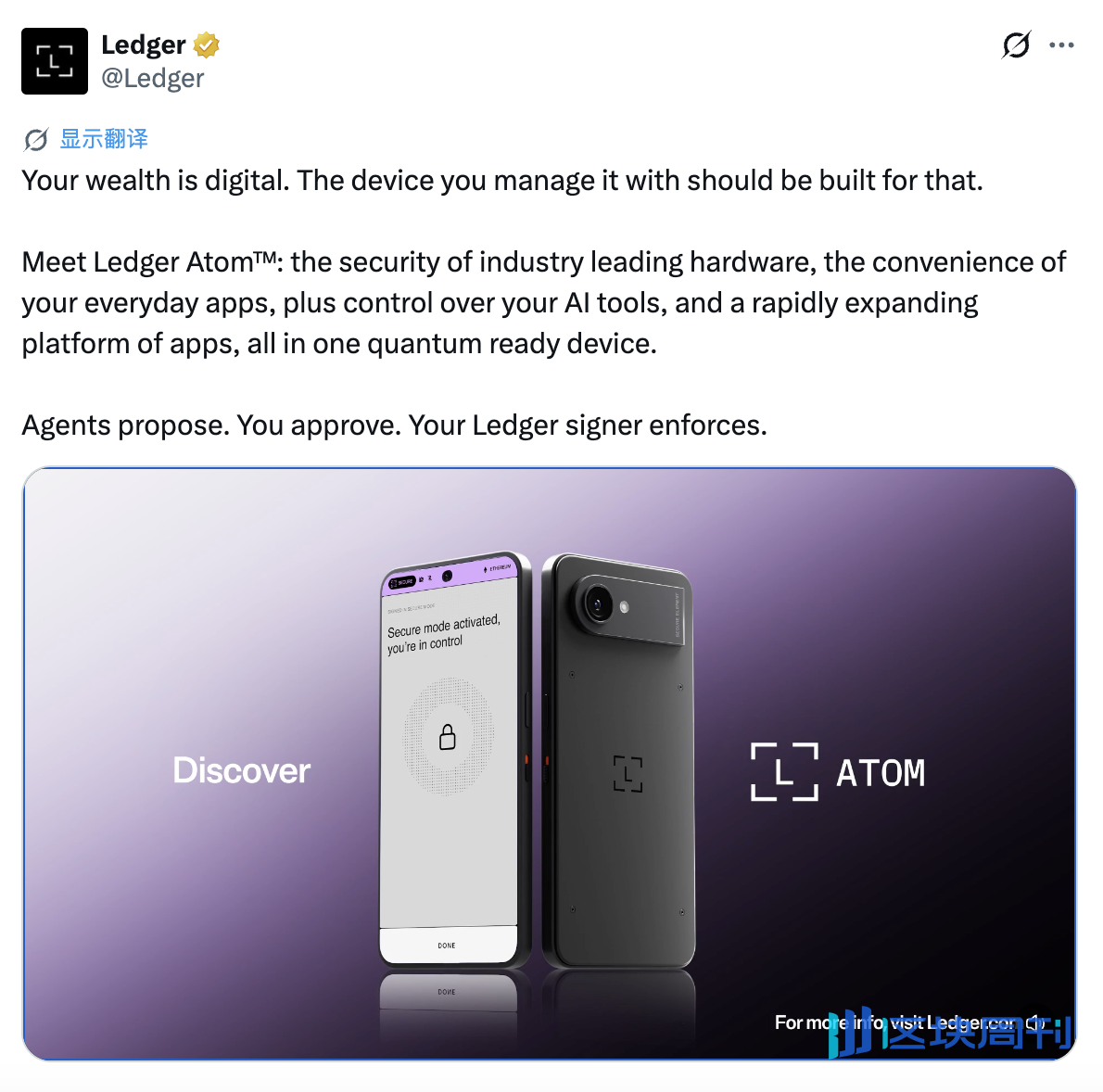
On October 16, Ledger unveiled Atom, a phone-style hardware wallet priced at $849 for the founder's edition and $899 for the standard model, with a mid-2027 launch planned. It features dual operating systems, a dedicated security chip, FPGA-based hardware screen isolation, and tamper-resistant design, plus an AI agent to help prepare transactions—though sensitive actions still require confirmation on the secure screen. The article notes that CryptoBilis, Ledger's Southeast Asian distributor, suffered a supply chain attack that cost users nearly $100 million, with no clear compensation plan. The community has also questioned the pricing, the conspicuous branding, and the risk of physical coercion. CertiK data shows 52 wrench attacks in the first half of 2026, causing $124.1 million in losses.
 SOLLedger AtomAI AgentPricing Controversy
2026-10-21

NEAR Targets Protocol Security After $112 AI Proof-Generation Run
NEAR Protocol plans to apply AI-assisted formal verification to its protocol and core smart contracts, following a NEAR AI report that solved 672 PutnamBench math problems at a model cost of $111.85. The article notes that production-grade verification still requires accurate software models, clearly defined requirements, and proofs covering real deployed implementations; formal verification can only guarantee correctness for specific properties within stated assumptions and must complement testing and code review. NEAR co-founder Illia Polosukhin ties the research to the risks posed by AI-generated code.
NEARAI-assisted formal verificationautomated proof generationsmart contract security2026-10-19