Replace-by-fee, or RBF, is a feature that lets you replace an unconfirmed Bitcoin transaction with a new version that pays a higher fee, so a stuck payment can finally confirm. It is essentially a controlled, self-inflicted double-spend that miners accept because it pays them more. Here is what RBF is, how it works, when to use it, and the caveat every merchant should know.
What RBF is
Bitcoin transactions are chosen by miners largely by fee, so a transaction that offered too little can sit unconfirmed for a long time when the network is busy. Replace-by-fee is the standard way to fix this: you broadcast a new version of the same transaction that pays a higher fee, and the network treats it as a replacement. Bitcoin Core added an opt-in form of this, defined in BIP-125, back in 2016.
How it works
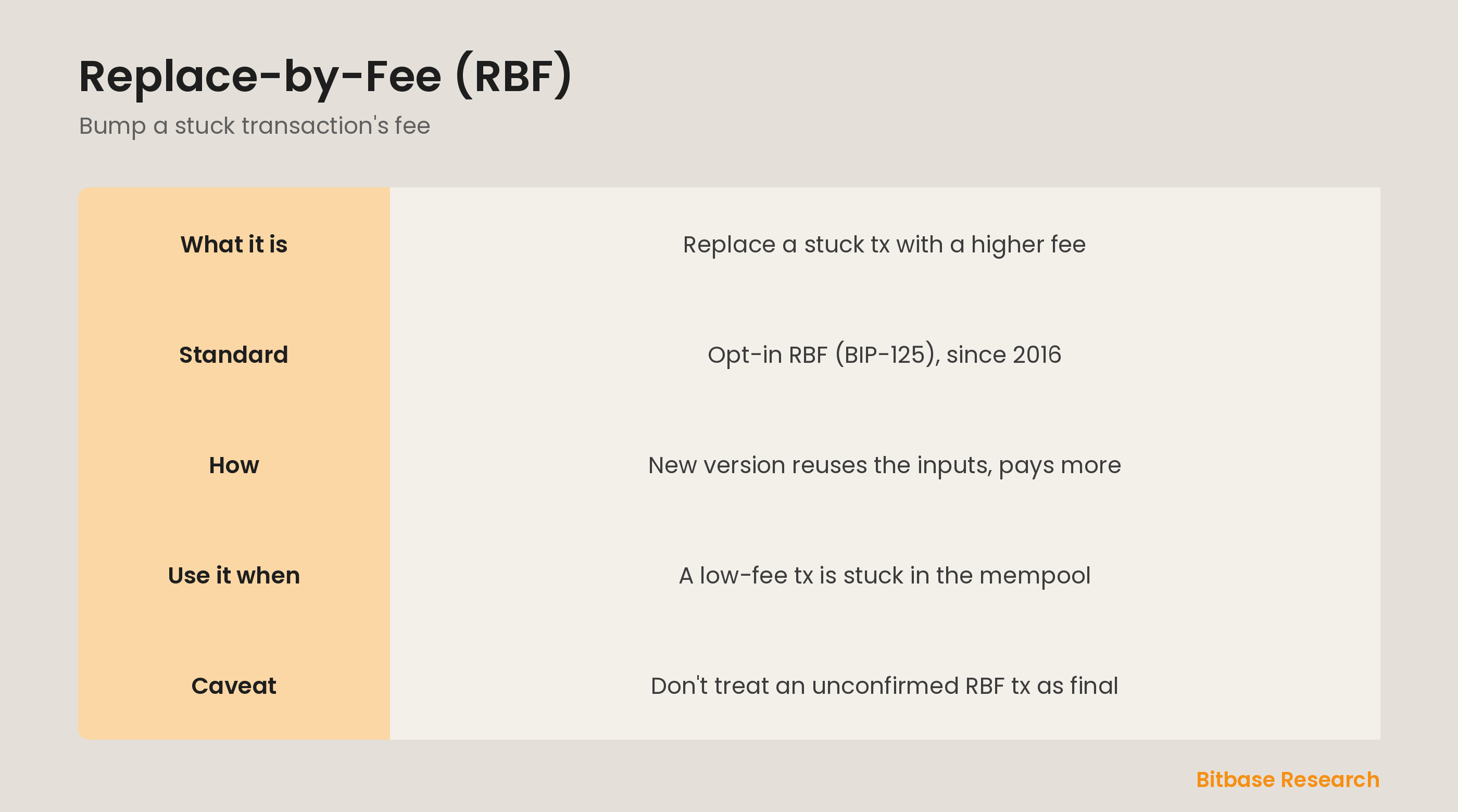
The replacement transaction spends the exact same coins as the original but attaches a bigger fee — so in strict terms it double-spends your own inputs. Miners prefer the version that pays more, so the new transaction gets confirmed and the original is dropped. Wallets that support RBF mark a transaction as replaceable when you send it and later offer a “bump fee” button; the replacement supersedes the first, and only one of them ever confirms.
When to use it
RBF is for a payment that is stuck because its fee was set too low for current demand. Instead of waiting indefinitely, you bump the fee and it confirms sooner. If your wallet did not flag the transaction as replaceable, an alternative is child-pays-for-parent (CPFP), where you spend the pending output in a new, high-fee transaction to pull the original along. Either way, the goal is the same: pay more to jump the queue.
The zero-confirmation caveat
RBF has a flip side. Because an unconfirmed RBF transaction can be replaced, you should never treat one as a finished payment. Someone could send you an RBF transaction and then replace it with one that pays you nothing, all before it confirms. This is a key reason merchants and exchanges wait for at least one confirmation, and why accepting zero-confirmation payments — especially RBF-flagged ones — is risky.
The bottom line
Replace-by-fee lets you rescue a stuck Bitcoin transaction by rebroadcasting it with a higher fee, turning an anxious wait into a quick fix. It works by double-spending your own inputs in a way the rules allow, so miners take the better-paying version. Just remember the trade-off: the same flexibility means an unconfirmed RBF transaction is never final until a block locks it in. To keep learning the fundamentals, follow more from Bitbase Academy.
Disclaimer: This article is educational content from Bitbase Academy, provided for information only. It does not constitute investment, trading, tax, or financial advice. Crypto assets are volatile; assess your own risk. Written as of June 2026; refer to the latest official information.
References
[1] Bitcoin Improvement Proposals, "BIP-125: Opt-in Full Replace-by-Fee Signaling" github.com
[2] Bitcoin Optech, "Replace by fee" bitcoinops.org
[3] Investopedia, "Double-Spending: What It Is and How It Works" investopedia.com