
The most common way people lose crypto today is not a stolen password — it is a signature they gave willingly. Token approvals are the permissions that let apps move your tokens, and understanding them is the difference between using DeFi safely and handing a scammer the keys.
Why approvals exist
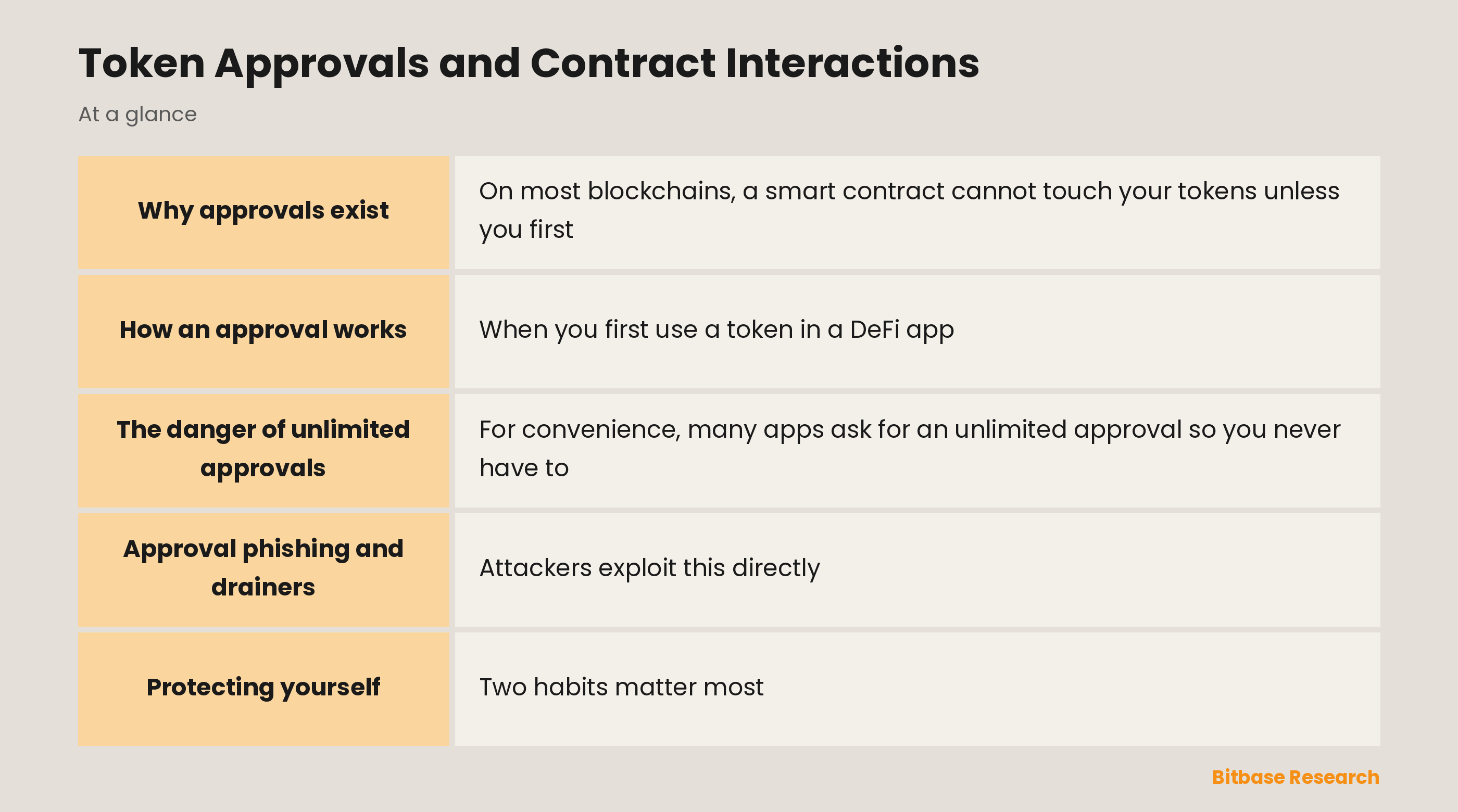
On most blockchains, a smart contract cannot touch your tokens unless you first grant it permission. That permission is a token approval: a transaction that tells your wallet a specific contract is allowed to move up to a certain amount of a specific token on your behalf. It exists so that apps — a decentralized exchange, a lending protocol — can act for you without ever holding your funds directly.
How an approval works
When you first use a token in a DeFi app, you sign two things: an approval, then the action itself. The approval records on-chain how many of that token the contract may spend. From then on, the app can call a function to pull the approved amount whenever you interact — which is convenient, but it also means that permission keeps standing until you remove it.
The danger of unlimited approvals
For convenience, many apps ask for an unlimited approval so you never have to approve again. The problem is that an unlimited approval is a standing license to drain that entire token balance. If the contract you approved is malicious, or is later hacked, it can take everything you hold of that token — not just what you were trading. Convenience and risk are the same setting here.
Approval phishing and drainers
Attackers exploit this directly. A fake site or airdrop tricks you into signing an approval to a wallet they control; later they simply pull your tokens. These "drainer" kits have become the dominant way retail users get robbed, precisely because your wallet is otherwise secure — you were not hacked, you signed. Modern kits can batch many approvals into one click, emptying a wallet in seconds.
Protecting yourself
Two habits matter most. First, be deliberate about what you sign: read approval prompts, prefer limited amounts over unlimited, and never approve from a link in an unsolicited message. Second, review and revoke old approvals regularly using a reputable approval-checker tool, which shows every contract you have authorized and lets you cancel the ones you no longer use. Newer standards also aim to make approvals safer by routing them through a single audited contract.
The bottom line
Approvals are the quiet plumbing of DeFi: necessary, powerful, and dangerous when ignored. Every one you grant is standing permission that lasts until you revoke it, so treat signatures with the same care as passwords. Approve narrowly, revoke often, and remember that in on-chain finance, the riskiest click is usually the one you made yourself.
Disclaimer: This article is educational content from Bitbase Academy, provided for informational purposes only. It is not investment, trading, tax, or financial advice. Written as of July 2026; rely on the latest official information.
References
[1] MetaMask, "What are token approvals" metamask.io
[2] Revoke.cash, "How to revoke token approvals" revoke.cash