"Burning" tokens and "buying them back" are two of the most talked-about tools in crypto, both aimed at shrinking supply or returning value. But how do they actually work under the hood, and what makes one meaningful and another meaningless? This is the mechanics, plainly.
What burning a token means
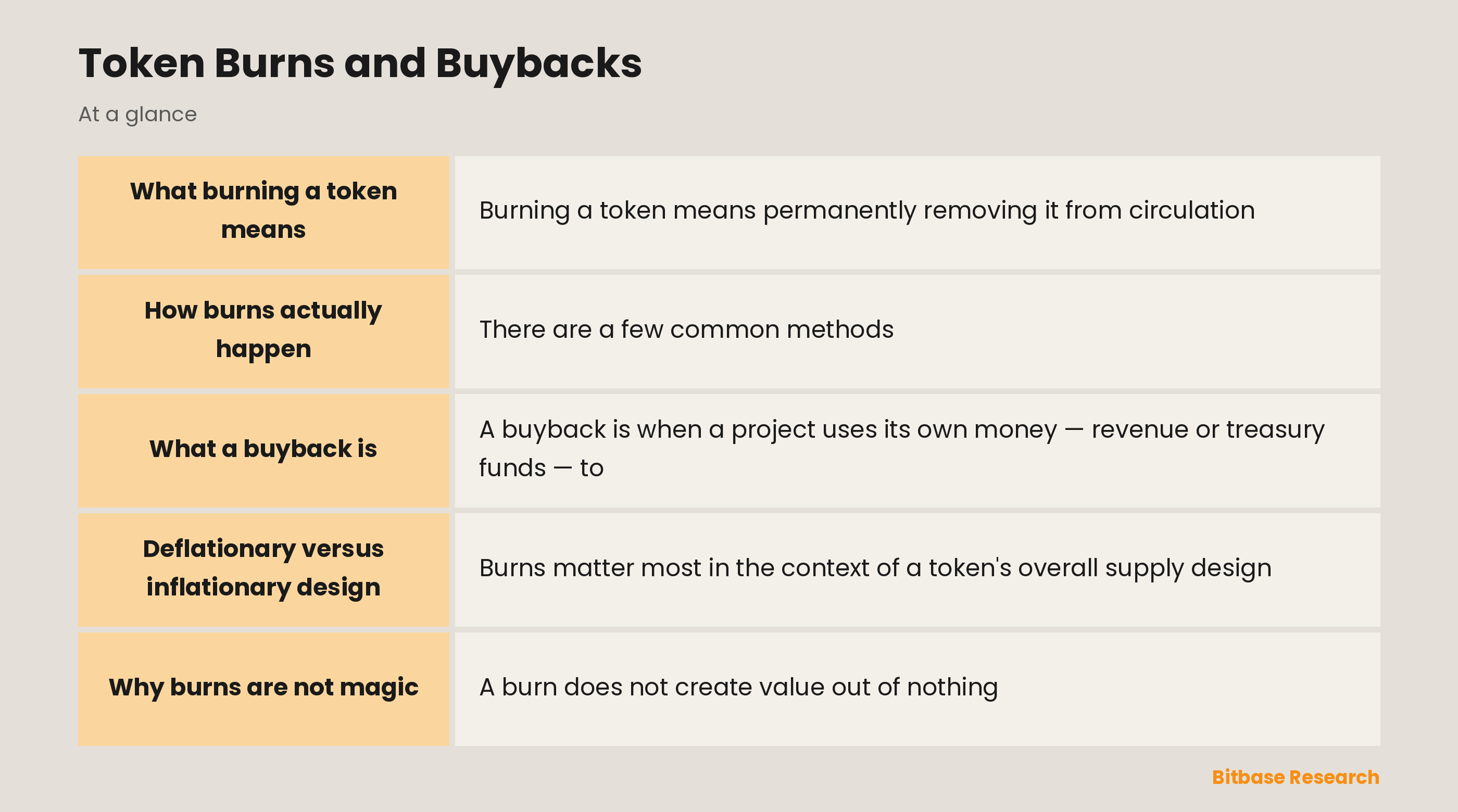
Burning a token means permanently removing it from circulation, usually by sending it to a special address that no one controls and no one can spend from — a digital black hole. Once burned, those tokens are gone forever, lowering the total supply. Projects burn tokens to make each remaining one scarcer, in the hope that steady demand then supports a higher price.
How burns actually happen
There are a few common methods. A project can do a one-time manual burn from its treasury; it can burn a cut of fees automatically with every transaction, as Ethereum does with part of its network fees; or it can run scheduled burns tied to revenue, like an exchange token's quarterly program. BNB, for example, runs an automatic quarterly burn that continues until its supply is cut to a fixed target. The method tells you whether a burn is a habit or a stunt.
What a buyback is
A buyback is when a project uses its own money — revenue or treasury funds — to purchase its token on the open market, just as a company repurchases its shares. The bought tokens are often then burned, combining both tools into a "buy-back-and-burn." Because a buyback uses real funds to create real buying pressure, it can be a stronger signal than a burn of tokens the project already held.
Deflationary versus inflationary design
Burns matter most in the context of a token's overall supply design. A deflationary token burns faster than it issues, so supply shrinks over time; an inflationary one issues new tokens faster than it burns, so supply grows. Many tokens sit in between, and a burn only meaningfully tightens supply if it outpaces whatever new tokens are being emitted.
Why burns are not magic
A burn does not create value out of nothing. If demand falls while supply shrinks, the price can still drop; scarcity only helps when people actually want the token. Burns can also be used cosmetically — destroying tokens that were locked or unsellable anyway — to generate headlines without real impact. Always ask what supply was actually affected.
The bottom line
Burns permanently cut supply and buybacks deploy real money to support a token, and the best programs tie both to genuine, ongoing revenue rather than one-off announcements. They can strengthen a token's economics, but only alongside real demand — scarcity alone is not a business model. Judge them by their mechanics and consistency, not by the size of the headline number.
Disclaimer: This article is educational content from Bitbase Academy, provided for informational purposes only. It is not investment, trading, tax, or financial advice. Written as of July 2026; rely on the latest official information.
References
[1] Binance Academy, "What Is BNB Auto-Burn" binance.com
[2] Ethereum.org, "Transaction fees and EIP-1559" ethereum.org