
Two strategies can end the year with the same profit, yet one may have been far more punishing to live through. The difference is drawdown: how far your account fell from its high point along the way. Drawdown is one of the most important and most overlooked measures of risk, because it captures the pain and the danger that a single return figure hides. Here is what drawdown is, why the recovery math is so brutal, and how to keep it under control.
What drawdown is
Drawdown is the decline from a peak in your account balance down to a subsequent low, usually expressed as a percentage. If your account grows to 10,000 and then falls to 7,000 before recovering, that is a 30 percent drawdown. It measures losing stretches from the top, not from where you started, so it reflects what it actually felt like to hold on through the decline.
Maximum drawdown
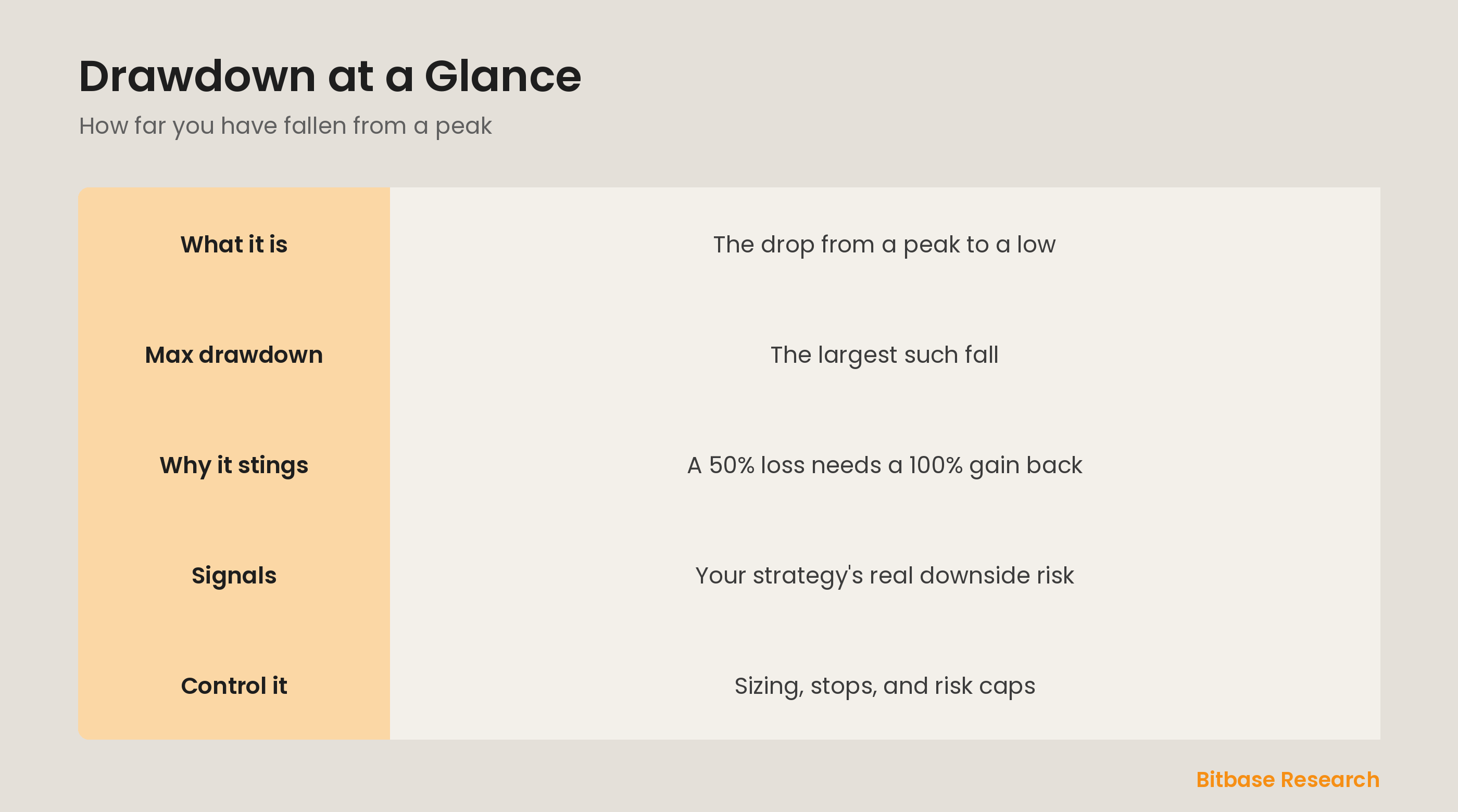
Maximum drawdown is the single largest peak-to-trough drop over a period — the worst it ever got. It is a key risk number because it tells you the deepest hole a strategy or portfolio has put you in. A strategy with a strong average return but a huge maximum drawdown may look great on paper yet be nearly impossible to trade in real life without panicking or being wiped out.
Why the recovery math hurts
Drawdowns are dangerous because gains and losses are not symmetric. A loss requires a larger percentage gain just to get back to even: lose 20 percent and you need 25 percent to recover; lose 50 percent and you need a full 100 percent; lose 80 percent and you need 400 percent. The deeper the hole, the disproportionately harder the climb out, which is why avoiding large drawdowns matters more than chasing large gains.
How to manage it
You control drawdown mainly through risk management. Size each position so no single loss is severe, use stop-losses to cut losers before they deepen, and spread risk rather than concentrating it in one bet. Setting a cap on how much you are willing to lose overall keeps a bad run survivable. The goal is not to avoid every loss, but to keep any drawdown shallow enough that you can recover from it.
The bottom line
Drawdown measures how far your account has fallen from its peak, and maximum drawdown captures the worst of it. It matters because recovering from a loss takes a disproportionately larger gain — a 50 percent drop needs a 100 percent rise to undo. Manage it with position sizing, stop-losses, and firm risk caps, because surviving drawdowns is what lets you stay in the game long enough to profit. To keep learning the fundamentals, follow more from Bitbase Academy.
Disclaimer: This article is educational content from Bitbase Academy, provided for information only. It does not constitute investment, trading, tax, or financial advice. Crypto assets are volatile; assess your own risk. Written as of June 2026; refer to the latest official information.
References
[1] Investopedia, "Drawdown: What It Is, Risks, and Examples" investopedia.com
[2] Investopedia, "Maximum Drawdown (MDD): Definition and Formula" investopedia.com
[3] Investopedia, "Risk Management in Finance: Definition and Common Strategies" investopedia.com