
Block size is how much data a single block on a blockchain can hold. Because each block carries a batch of transactions, its size sets a hard limit on how many transactions the network can process at once. Here is what block size means, Bitcoin's particular limit, the trade-off it forces, and why it shows up in your fees.
What block size is
A blockchain adds one block at a time, and each block is a container for recent transactions. Block size is simply how much data that container can hold. Since transactions take up space, a fixed block size caps how many fit in each block — and, combined with how often blocks are added, how many transactions the whole network can clear per second. It is one of the core limits on a chain's throughput.
Bitcoin's limit, from 1 MB to weight
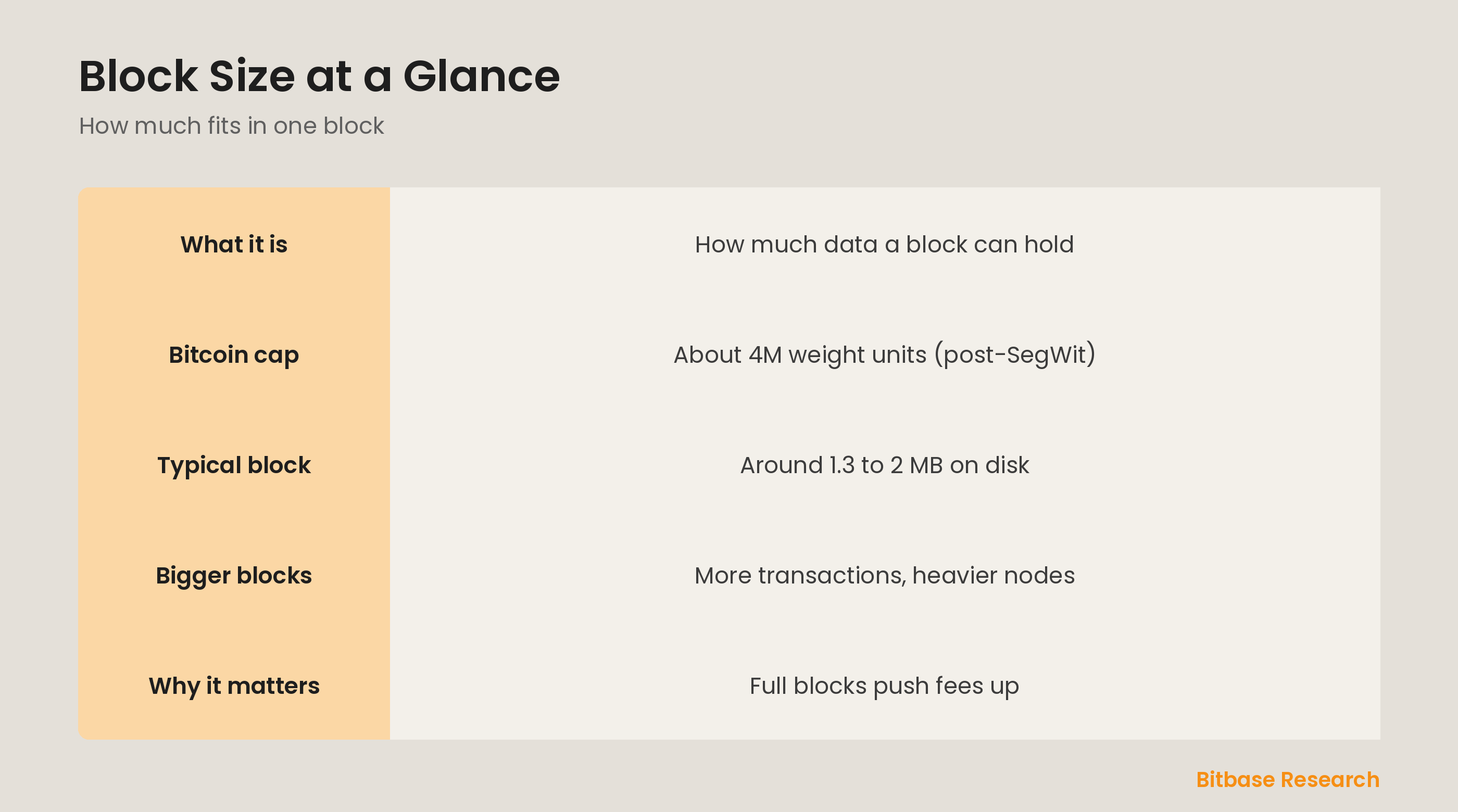
Bitcoin originally capped blocks at 1 megabyte, added in 2010 as an anti-spam measure. In 2017 the SegWit upgrade replaced that flat cap with a limit of about four million “weight units,” which counts signature data more cheaply than the rest. In practice this lets a typical Bitcoin block hold roughly 1.3 to 2 megabytes of data, a bit more than the old 1 MB, without a contentious hard change to the rule.
The size trade-off
Why not just make blocks much bigger? Larger blocks would fit more transactions and ease fees, but every full node must download, verify, and store every block forever. Bigger blocks make running a node more expensive, which can push validation into fewer hands and weaken decentralization. This tension — throughput versus keeping nodes cheap to run — drove the long “block size war” and led to the 2017 split that created Bitcoin Cash.
Why it matters to you
Block size affects what you pay and how long you wait. When more transactions are competing than a block can hold, blocks fill up and users bid higher fees to get included sooner; when demand is light, fees fall. That is why Bitcoin fees spike during busy periods: the space in each block is limited by design. Understanding block size explains why a small, decentralized chain deliberately keeps its throughput modest.
The bottom line
Block size is the amount of data a block can carry, and it quietly governs a blockchain's capacity, its fees, and part of its decentralization. Bitcoin keeps blocks small on purpose so that anyone can still run a node, accepting higher fees at peak times as the cost. When you see fees rise, remember there is only so much room in each block — and that limit is a design choice, not a bug. To keep learning the fundamentals, follow more from Bitbase Academy.
Disclaimer: This article is educational content from Bitbase Academy, provided for information only. It does not constitute investment, trading, tax, or financial advice. Crypto assets are volatile; assess your own risk. Written as of June 2026; refer to the latest official information.
References
[1] River Financial, "Block Size" river.com
[2] Bitcoin Magazine, "What Is The Bitcoin Block Size Limit?" bitcoinmagazine.com
[3] Investopedia, "Bitcoin: What It Is, How It Works" investopedia.com