
Buying crypto is only half the journey. At some point you may want to turn digital assets back into money you can spend in the everyday world, and for that you need a fiat off-ramp. It is the mirror image of an on-ramp: the exit from the crypto highway back into your bank account. Here is what a fiat off-ramp is, how it works, the common methods, and what to expect along the way.
What a fiat off-ramp is
A fiat off-ramp is any service that lets you convert cryptocurrency back into fiat money — traditional currency like dollars or euros — that you can withdraw to a bank account and spend normally. If an on-ramp is how money becomes crypto, an off-ramp is how crypto becomes money again. Exchanges are the most common off-ramps, alongside certain payment services and crypto cards.
How it works
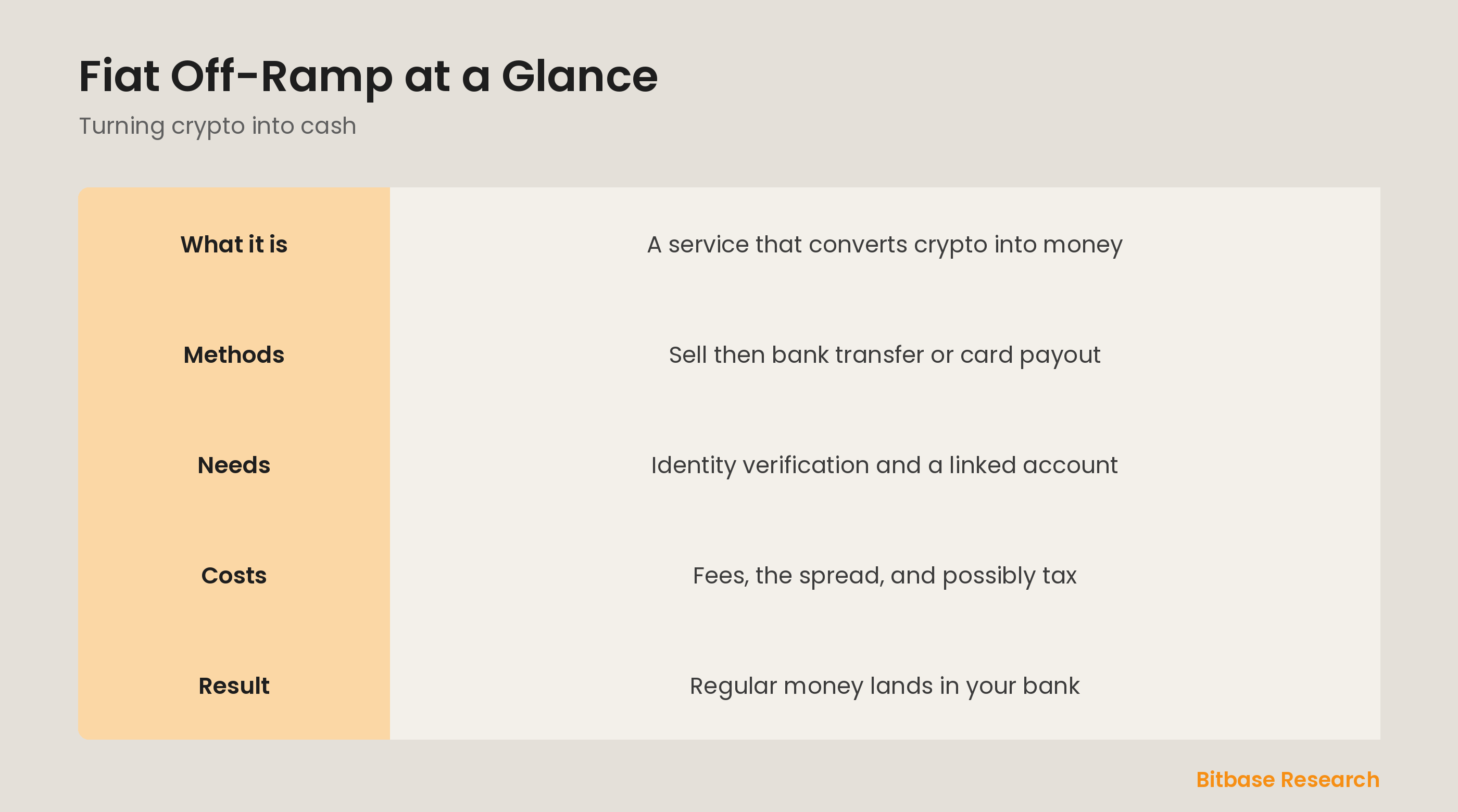
Cashing out usually happens in two steps. First you sell your crypto on the platform for fiat at the current market price, which credits your account with a fiat balance. Then you withdraw that balance to a linked bank account or debit card. The crypto leaves your account, and after processing, regular money arrives in your bank — the reverse of how you first bought in.
Common methods
The most common off-ramp is a regulated exchange that pays out by bank transfer. Some services send funds to a debit card, and crypto-linked cards effectively off-ramp with every purchase by converting crypto to fiat at the point of sale. Peer-to-peer platforms let you sell directly to another person for cash or a bank payment. As with on-ramps, the method affects the fees and how long the money takes to arrive.
What to expect
Off-ramps are regulated, so expect identity verification and a bank account or card in your own name, matched to your verified identity, before you can cash out. Expect costs too: a withdrawal fee, the spread when you sell, and in many places tax on any gains, since selling crypto for fiat can be a taxable event. Use a reputable provider, and keep records of your sales for tax time.
The bottom line
A fiat off-ramp is the bridge that turns cryptocurrency back into regular money you can spend, usually by selling on an exchange and withdrawing to your bank. Expect identity verification, fees and the spread, and possibly tax on your gains. It is the exit point from crypto, so choose a reputable, regulated off-ramp, keep good records, and compare methods to get the most of your money back out. To keep learning the fundamentals, follow more from Bitbase Academy.
Disclaimer: This article is educational content from Bitbase Academy, provided for information only. It does not constitute investment, trading, tax, or financial advice. Crypto assets are volatile; assess your own risk. Written as of June 2026; refer to the latest official information.
References
[1] Investopedia, "Fiat Money: What It Is, How It Works, Example, Pros and Cons" investopedia.com
[2] Investopedia, "Know Your Client (KYC): What It Means, Compliance Requirements" investopedia.com
[3] Investopedia, "Anti-Money Laundering (AML): What It Is and How It Works" investopedia.com