
After learning a handful of candlestick patterns, it is tempting to think you can predict the market by spotting shapes. The reality is more modest: patterns are useful hints that shift the odds slightly, not crystal balls. Understanding how reliable they really are, and what makes them work or fail, is what separates traders who use them well from those who get burned. Here is an honest look at candlestick reliability.
Patterns are probabilities, not predictions
A candlestick pattern does not tell you what will happen; at best it nudges the odds. A bullish reversal pattern might mean an upturn is somewhat more likely, but plenty of them fail and price keeps falling. Treating a pattern as a guarantee is the fastest way to lose money on it. The right mindset is to see each pattern as one probabilistic clue that tilts the balance a little, to be weighed against everything else on the chart.
Why context changes everything
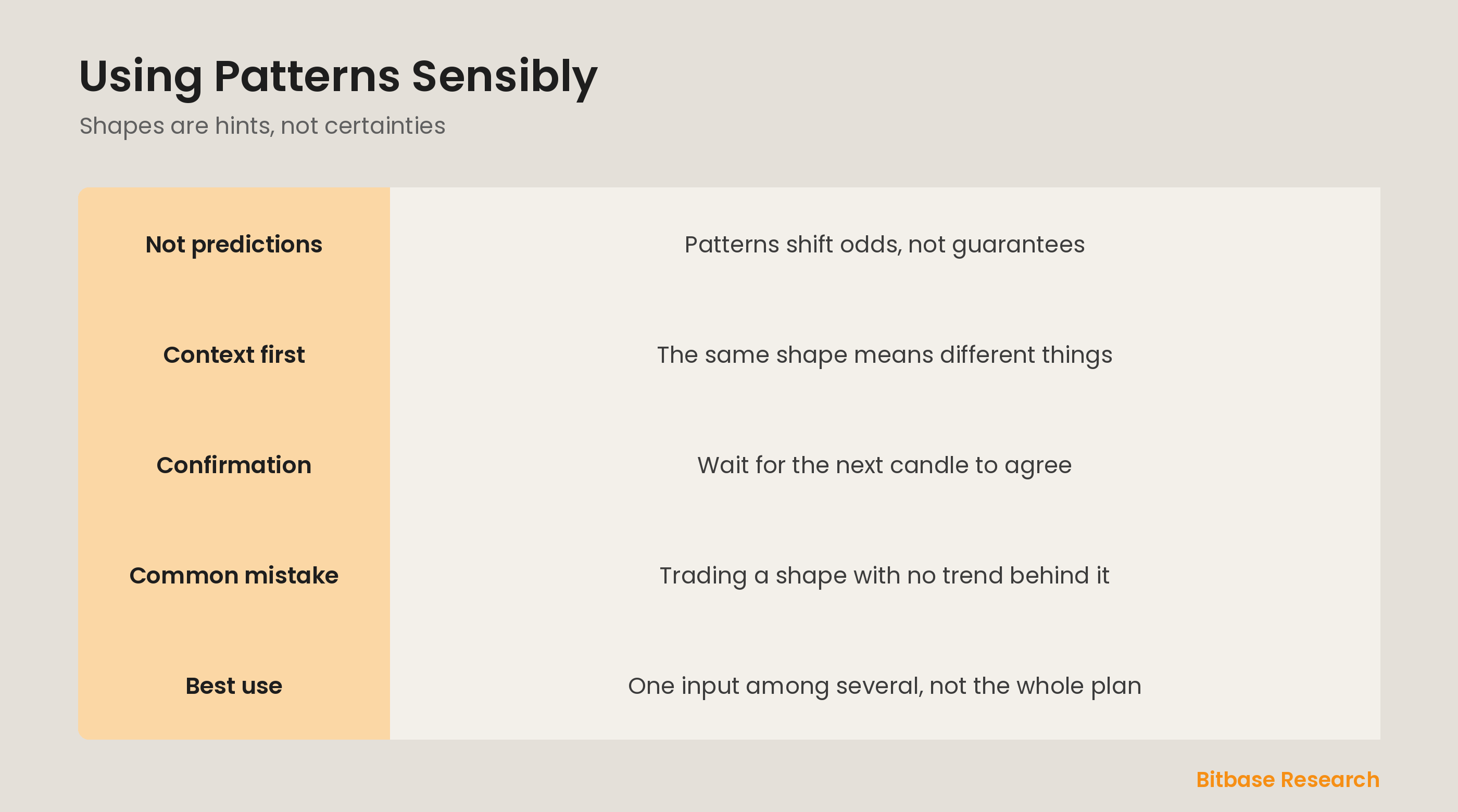
The exact same candle shape can be meaningful or meaningless depending on where it appears. A hammer at the bottom of a clear downtrend, near support, carries a real reversal message; the identical hammer in the middle of choppy, directionless trading is just noise. Patterns only earn their meaning from context, the trend, the key levels, and the overall structure around them. Reading the shape without the context is how beginners get misled again and again.
The role of confirmation
A single pattern is a hypothesis; the next candle or two is the test. Confirmation means waiting for price to actually move in the pattern's suggested direction before acting, rather than anticipating on the pattern alone. A bullish reversal that is immediately followed by a strong up candle is far more trustworthy than one that is not. Waiting for confirmation costs you a slightly worse entry but filters out many of the patterns that would have failed.
Using patterns sensibly
The traders who get value from candlestick patterns use them as one input among several, never as a standalone system. They combine a pattern with the trend, support and resistance, and other signals, and they wait for confirmation before acting. They also accept that even good setups fail and manage risk accordingly. Used this way, as a modest edge inside a broader plan, candlestick patterns are genuinely useful; used as magic shapes, they disappoint.
The bottom line
Candlestick patterns are probabilistic hints, not predictions, and their reliability depends far more on context and confirmation than on the shape itself. The same candle means different things in different places, so the trend and key levels around it decide whether it matters, and the following candles confirm or deny it. Use patterns as one input among several within a plan that manages risk, and they help; treat them as certainties, and they will let you down. To keep learning the fundamentals, follow more from Bitbase Academy.
Disclaimer: This article is educational content from Bitbase Academy, provided for information only. It does not constitute investment, trading, tax, or financial advice. Crypto assets are volatile; assess your own risk. Written as of June 2026; refer to the latest official information.
References
[1] Investopedia, "Price Action: What It Is and How Stock Traders Use It" investopedia.com
[2] Investopedia, "Technical Analysis: What It Is and How to Use It" investopedia.com
[3] Investopedia, "Candlestick: What It Is, What It Tells Investors" investopedia.com