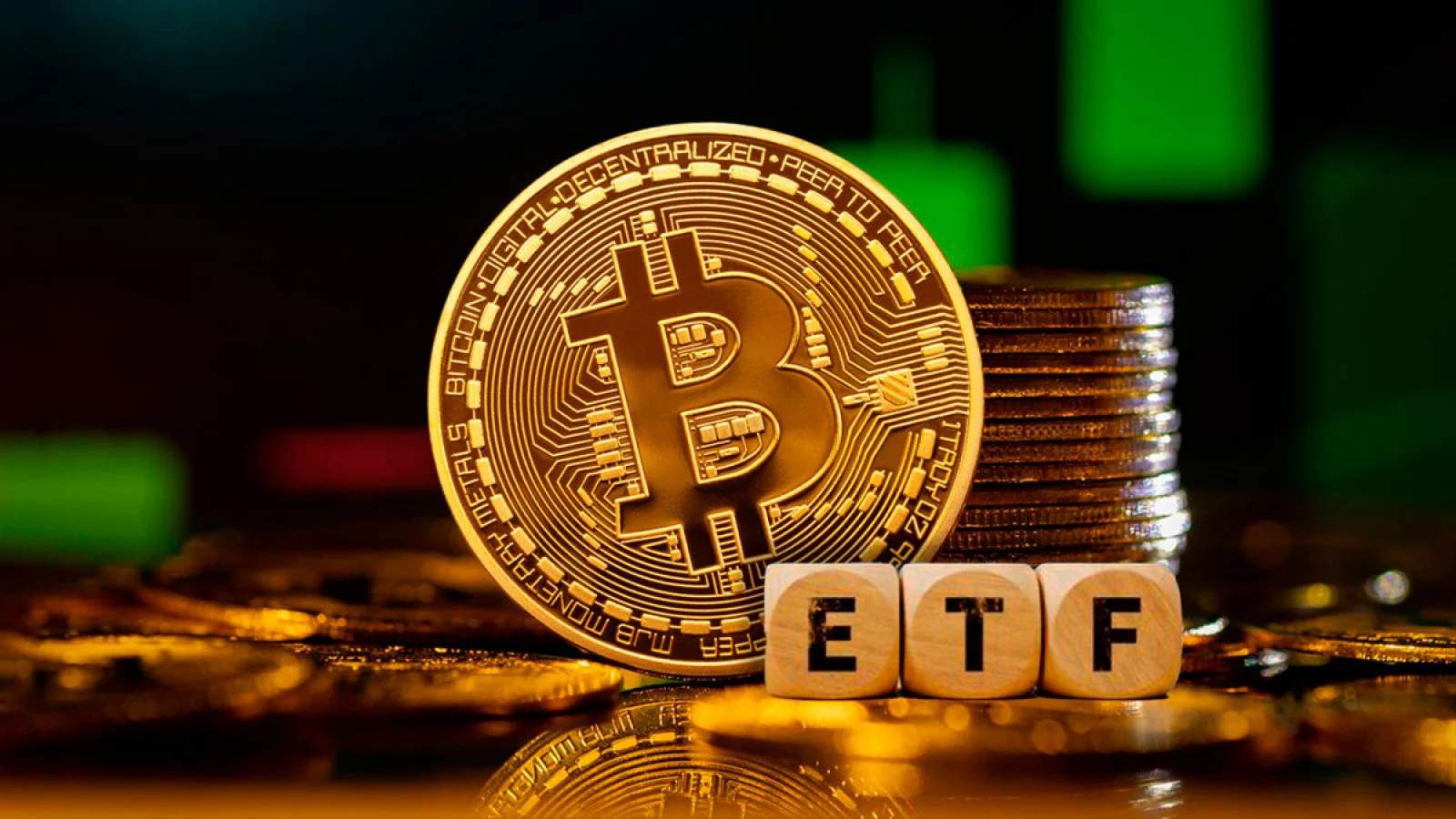
Bloomberg senior ETF analyst Eric Balchunas believes Bitcoin exchange-traded funds could eventually grow to three times the size of the gold ETF market.
He claims that demographic changes, growing institutional adoption and Bitcoin’s gradual maturation could drive hundreds of billions of dollars into the products.
Balchunas clarified his prediction on Friday after an X user questioned whether tripling gold was too aggressive.
"BTC ETFs assets triple gold ETFs assets. That would mean BTC AUM hits $300-400b. Totally realistic long term imo," he wrote.
The analyst had made the prediction during a recent interview, arguing that younger generations increasingly view Bitcoin as a store of value in much the same way older investors have traditionally viewed gold.
"I think as the younger investors get more money and grow up with Bitcoin as their quote-unquote store of value, I do believe the Bitcoin ETFs will triple gold in assets," Balchunas said.
Three main reasons
First, Bitcoin has a much younger investor base. Second, he expects major financial institutions to make greater use of the asset as its volatility and correlation with technology stocks decline. Finally, he believes Bitcoin has significantly more enthusiasm and marketing power behind it than gold ETFs.
"There’s way more enthusiasm and sales firepower," Balchunas wrote.
Balchunas acknowledged that gold currently retains several major advantages over Bitcoin, particularly among large institutional investors.
Gold has thousands of years of history behind it, while Bitcoin is only 17 years old. It is also substantially less volatile.
Balchunas compared Bitcoin’s current stage of development to adolescence.
"Bitcoin is like gold as a teenager," he said. "Gold is 5,000 years old. It was mentioned 450 times in the Bible, for Christ’s sake. I mean, that’s old. And Bitcoin is 17 years old."
Volatility, according to Balchunas, remains one of the main reasons some major investors are reluctant to make substantial Bitcoin allocations.
"If you look at the ETF issuers and they do these surveys, all the investors that they survey, their main issue with Bitcoin is volatility," he said.
He believes that could become an “inflection moment” when large institutions begin treating Bitcoin as a more reliable store of value or portfolio diversifier.