

According to SoSoValue data, US spot Bitcoin ETFs recorded $134.47 million in net inflows on Sept. 25, bringing the week's total to approximately $2.39 billion.
ETF demand remained positive throughout the week. Monday saw the largest inflow at roughly $999 million, followed by $714.7 million on Tuesday, $346.9 million on Wednesday, $190.7 million on Thursday and $134.5 million on Friday.
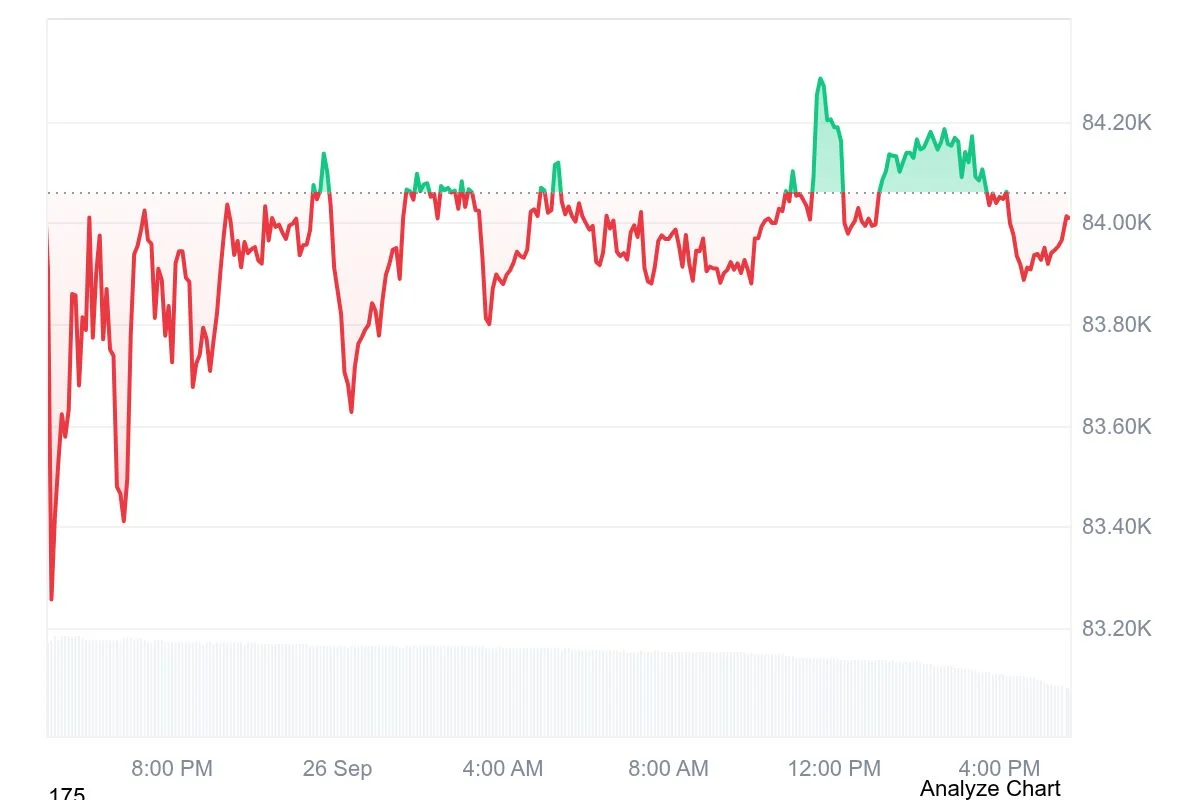
The seven-day sequence of positive flows came as Bitcoin moved through a volatile week. BTC briefly climbed above $87,000 before retreating, with the cryptocurrency trading near $84,000 on Friday.
BlackRock leads daily Bitcoin ETF inflows
BlackRock's IBIT recorded the largest net inflow among Bitcoin ETFs on Sept. 25, attracting approximately $96.99 million. Its cumulative historical net inflow has now reached about $65.28 billion, according to SoSoValue.
Fidelity's FBTC followed with approximately $49.32 million in daily inflows, taking its cumulative historical net inflow to around $11.06 billion.
Not every fund recorded positive flows. Bitwise's BITB experienced the largest outflow for the session, with approximately $11.85 million leaving the fund. Despite the latest withdrawal, BITB's cumulative historical net inflow remains around $2.13 billion.
The continued inflows are notable because they have persisted even as Bitcoin has pulled back from its weekly peak.
However, ETF data alone does not establish how much of the price movement has been driven directly by ETF demand, as Bitcoin's market price also responds to derivatives activity, broader liquidity conditions, macroeconomic developments and other sources of buying and selling.
The latest figures nevertheless indicate that demand through US-listed spot products has remained positive during the recent price consolidation.
Bitcoin moves back above mining cost
Bitcoin's move during the week also brought attention to mining economics. JPMorgan analysts have identified approximately $85,000 as a reference point for Bitcoin's average production cost, making the recent move above that level significant for miners.
BTC briefly crossed $85,000 during the latest rally before falling back below it. Bitcoin had reportedly spent around 280 days trading below the estimated production-cost level before the latest move higher.
Trading above estimated production costs can provide miners with improved operating economics, particularly for operators with relatively efficient infrastructure. However, a temporary price move above that threshold does not immediately alter the underlying economics of the mining industry.
Mining profitability also depends on factors including network difficulty, electricity costs, hardware efficiency, financing expenses and Bitcoin's subsequent price performance.
The broader market backdrop remains equally important. Bitcoin's recovery has coincided with sustained ETF inflows, but the cryptocurrency continues to trade below its recent high.
The combination of persistent institutional flows and price consolidation leaves the market focused on whether demand through spot ETFs can remain positive if volatility increases again.
For now, the weekly ETF figures show a clear continuation of net buying, with nearly $2.4 billion flowing into US spot Bitcoin ETFs over five sessions.
The data provide evidence of sustained demand for regulated Bitcoin investment products, while the price action shows that strong ETF inflows have not prevented short-term pullbacks.