


This article was compiled and organized by BlockWeeks
On October 29, Binance was hacked. According to statistics from blockchain analytics firm Elliptic, the scale of stolen assets reached as high as $6.43 billion. But what truly ignited industry discussion was not this staggering loss itself, but what happened in the following hour: USDT issuer Tether and USDC issuer Circle quickly froze the vast majority of the stolen USD stablecoins; that same evening, the committee responsible for overseeing the Arbitrum network, without needing private keys at all, directly transferred the ETH and ARB in the hacker's address away.
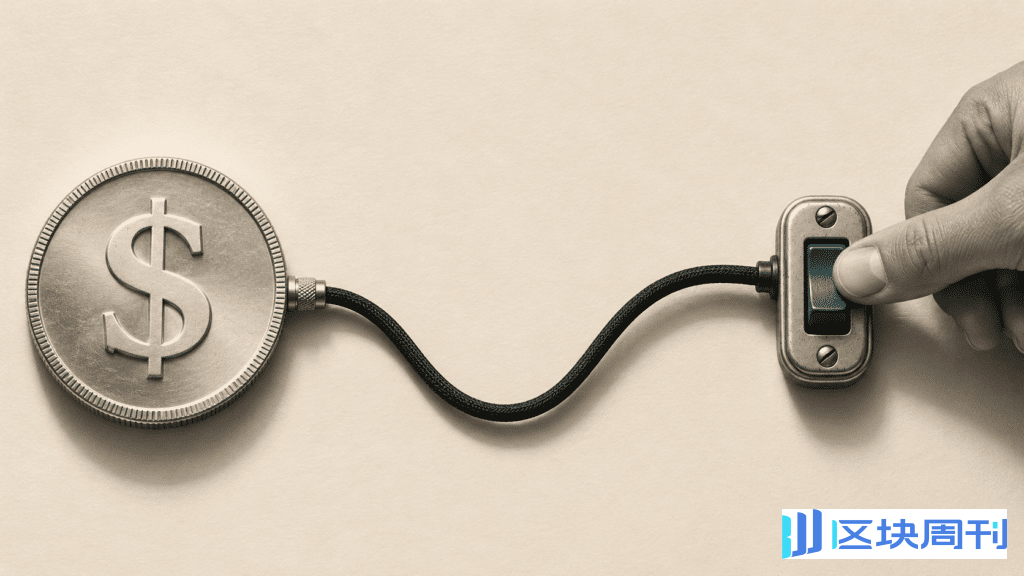
The foundation of the crypto world is that "only the person who holds the private key can move a coin." And this Binance theft case is merely the latest entry on the long list of exceptions to this iron rule: Tether and Circle have been freezing addresses for years, and in April of this year the Arbitrum committee performed a similar operation. Some people have begun to believe that, for certain tokens, "freezability" has gone from a vulnerability to a feature. Whether a coin can be frozen depends on who holds its "switch"—whether it is the company that issues it, a committee elected by network token holders, or no such person at all. This switch determines whether stolen coins can be intercepted, and it also raises a more fundamental question: apart from the private key holder, under exactly what circumstances, and by whom, is there the right to move a coin.
Stablecoins come with an "issuer switch"
Tether and Circle can freeze any address holding their tokens. The token contracts of both companies have built-in blacklists controlled by the issuer; once an address is placed on the list, it cannot transfer out its USDT or USDC. Tether's contract additionally allows the company to destroy blacklisted balances and reissue tokens—Tether says that it is precisely through this mechanism that it has recovered and returned approximately $1.2 billion from past theft cases. Circle's contract does not have this function.
Elliptic's tracking shows that Tether completed the freeze 37 minutes after the stolen USDT entered the hacker's main wallet, and Circle froze all $823 million of stolen USDC a few minutes later. At present, these two balances still remain in the hacker's wallet addresses.
Circle has publicly stated that the company will freeze funds "only when compelled by appropriate competent authorities in accordance with legal process." According to American Banker, in May of this year Circle added an exception to its freeze policy: an emergency request from law enforcement agencies can also trigger a freeze before a court order is issued.
The Arbitrum committee can "impersonate" any address
Arbitrum, as a Layer2 network of Ethereum, does not have a direct "freeze button," but it has a 12-member Security Council with broader powers. With 9 signatures, the committee can temporarily replace the software responsible for relaying transactions into Arbitrum, and through this replaced software, issue two transactions in the hacker's name, transferring 8,425 ETH and 74.6 million ARB to a custody address.
Arbitrum's governance charter allows the committee to execute any upgrade with "zero delay" "in response to a security emergency." In April of this year, the committee took the same action against the KelpDAO attacker, but that ETH was not released until June 15—freezing the relevant assets on Arbitrum itself is quite controversial, and the delay mainly stemmed from legal proceedings: family members holding a judgment against North Korea served a restraining order, the federal court had to approve the transfer first, and token holders then voted to transfer it to Aave.
Robinhood Chain, which launched on the Arbitrum tech stack in July of this year, currently has about $2.24 billion in total value locked, and it likewise gives similar freeze powers to the Robinhood wallet: requiring 7 of 8 signatures, with no waiting period—this assessment comes from L2BEAT, which specializes in scoring the security guarantees of such networks. More notably, among the 83 Layer2 networks tracked by L2BEAT, 79 leave users no withdrawal window at all before upgrades take effect.
Why no one can freeze Bitcoin
In sharp contrast to stablecoins and Layer2, no one can freeze stolen Bitcoin: the Bitcoin network has no issuer, no committee, and no relay software that can be replaced. The few historical cases in which "the entire network decided to revoke a transaction"—such as the hard fork after Ethereum's The DAO incident—all paid an extremely high cost in social consensus, and thus became precedents that have rarely been replicated since.
This pushes the question back to the level of value judgment: under what circumstances is freezing actually justified? Who is qualified to press this switch—the issuer, the network governance committee, the courts, or a vote of token holders? As U.S. regulatory rules continue to push stablecoin issuers toward stronger freezing capabilities, the boundaries of this switch are being redrawn, and related targets such as ARB, RUNE, Robinhood, and Circle will also be affected to varying degrees.