Summary: "It's not a large commercial order or a long-term joint development project; it's just a small number of prototypes given to Meta and AWS. This is a proactive investment of costs to win over major corporate clients, and it's hard to generate stable and sustained commercial revenue."
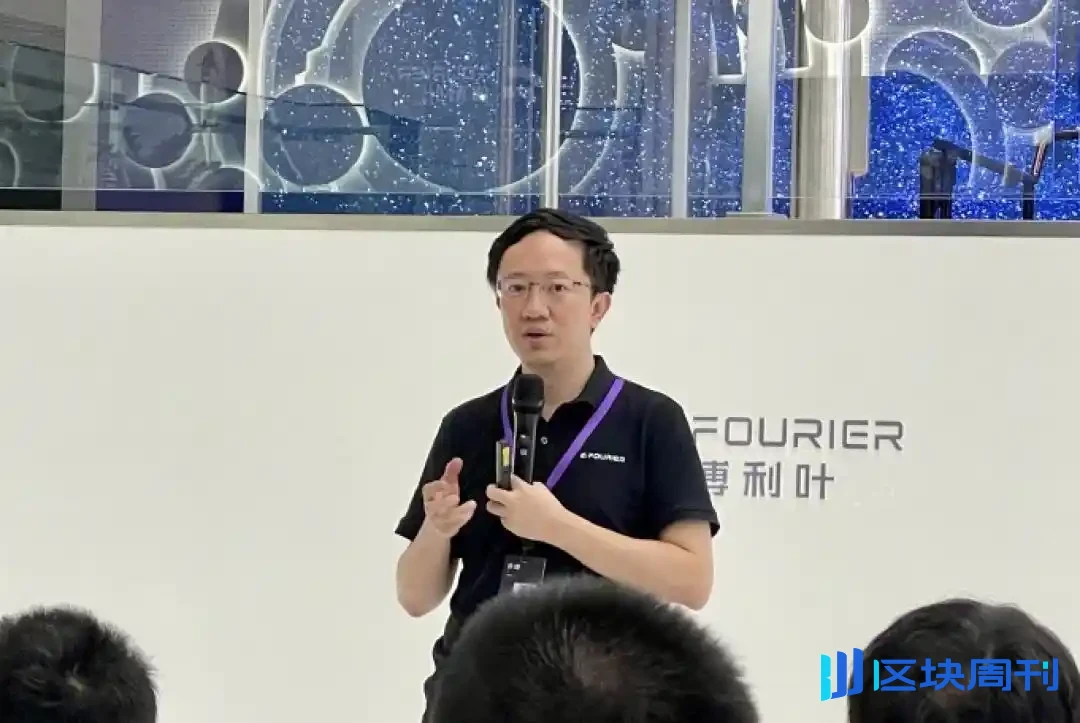
On November 1, according to The Information, Meta has jointly developed a humanoid robot prototype called "Max" with the Chinese robotics company Fourier, and the two sides completed the development in just three months. The second-generation product, Max 2, has also been launched. The market interpreted this as another tech giant personally entering the humanoid robot body segment after Tesla Optimus and Nvidia GR00T.
Phoenix Technology learned from multiple industry sources a completely different version: the so-called "joint development" essentially means Fourier is the ODM (design and manufacturing) party. In addition to Meta, Fourier also cooperates with AWS (Amazon) under the same model, and the cooperation only covers a few prototypes. "It's not a large commercial order or a long-term joint development project; it's just a small number of prototypes given to Meta and AWS. This is a proactive investment of costs to win over major corporate clients, and it's hard to generate stable and sustained commercial revenue."
According to reports, the prototype Max jointly developed by Meta and Fourier is about 1.5 meters tall and weighs 48 kilograms. It is equipped with Nvidia's Jetson Thor chip, features an expression display screen and five-finger dexterous hands, and is currently used only for internal experiments with no mass-production timetable. In response to media inquiries, Fourier said it was "not convenient to reply for the time being," and its official stance has remained silent.
In fact, Meta's own statements also show that Meta's robotics strategy is still in an early research stage. Max is positioned as an internal experimental prototype, and there is no clear timetable for a consumer-oriented mass-production version. On the hardware side, Meta has no plans to build its own production lines. Leveraging the mature supply chain and body design capabilities of Chinese robotics companies to complete rapid prototype validation is the lowest-cost path. Fourier's role is closer to that of a hardware solution supplier willing to exchange its own engineering resources for the logo of a Silicon Valley giant.
Public information shows that Fourier was founded in 2015, starting from medical rehabilitation robots, entered general-purpose humanoid robots in 2019, launched the GR-1 in 2023, and has since iterated to the GR-2 and GR-3. During the two years when embodied intelligence became the most crowded track in the primary market, Fourier, with its early hardware accumulation and foundation in rehabilitation scenarios, was once regarded as one of the representatives of Chinese humanoid robot body companies. In early 2025, the company completed nearly 800 million yuan in Series E financing, with investors including Shanghai state-owned institutions such as Pudong Venture Capital and Zhangjiang Science and Technology Investment.
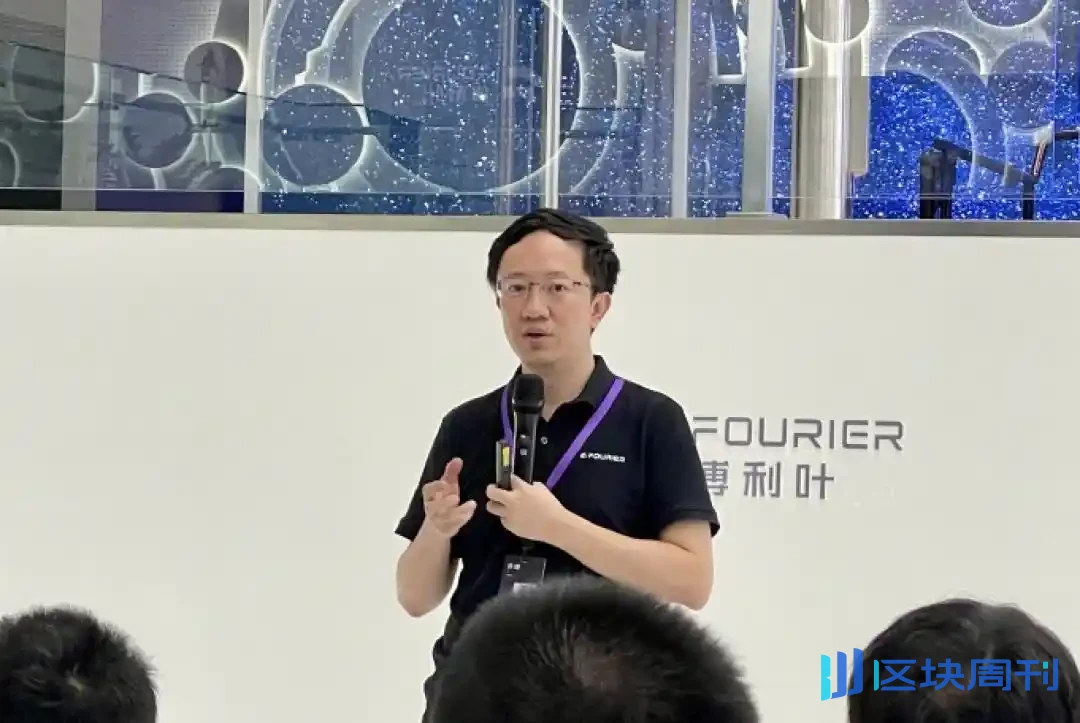
An investment industry source told Phoenix Technology that Fourier's original plan was to complete its shareholding reform before the IPO exit channel was implemented. "Institutions and original shareholders are all waiting for the IPO channel to be implemented so they can cash out," said a person close to Fourier.
In addition, the person said, "Fourier is currently under considerable financial pressure, and some R&D personnel have been laid off."
From an industry perspective, the funding gate for the embodied intelligence primary market is tightening. Phoenix Technology learned from multiple embodied industry practitioners that the primary market has recently suspended investment in the embodied track, mainly because institutions have begun to prudently review the feasibility of investing in projects without major technological breakthroughs.
Unlike other embodied projects, Fourier was founded in 2015, which means its investors already have clear expectations for exit. Robotics companies founded around the same period include UBTECH (2012), Unitree Robotics (2016), Deep Robotics (2017), and Leju Robotics (2016). Currently, Unitree Robotics and UBTECH have both completed listings, while Deep Robotics' STAR Market IPO application was accepted by the Shanghai Stock Exchange on May 18, 2026, with CITIC Securities as the sponsor, planning to raise approximately 2.503 billion yuan. According to public information in early October 2026, its review status has been updated to "under inquiry." Leju Intelligent's ChiNext IPO application was accepted by the Shenzhen Stock Exchange on May 19, 2026, planning to raise 2.6 billion yuan.
According to public information, Fourier has completed its shareholding reform, but has not yet officially submitted a prospectus or entered the coaching and filing stage. This is a clear gap compared with the pace of Unitree, Deep Robotics, and Leju, which have already entered the exchange acceptance or inquiry stage.
This article is from the WeChat public account "Phoenix Technology," author: Phoenix Technology