Author: Zhang Yaqi, Wallstreetcn
Global markets were largely in a wait-and-see mode on Wednesday. Stocks struggled for direction, oil prices were uncertain after their longest losing streak of the year, U.S. Treasuries barely moved, while the dollar bucked the trend and strengthened on the back of the Fed's hawkish stance, becoming the most prominent highlight of the day's market.
The three major U.S. stock indices opened lower collectively, with the Dow down 0.18%, the S&P 500 down 0.11%, and the Nasdaq down 0.13%. Popular tech stocks were mixed, with Meta up 1.13%, SK Hynix down 1.57%; IONQ shares rose 13%, the largest intraday gain since July 30. Spot gold fell below the $4,300/oz mark, at $4,299.92/oz. The dollar rose for a fourth consecutive day, hitting its highest level since July.
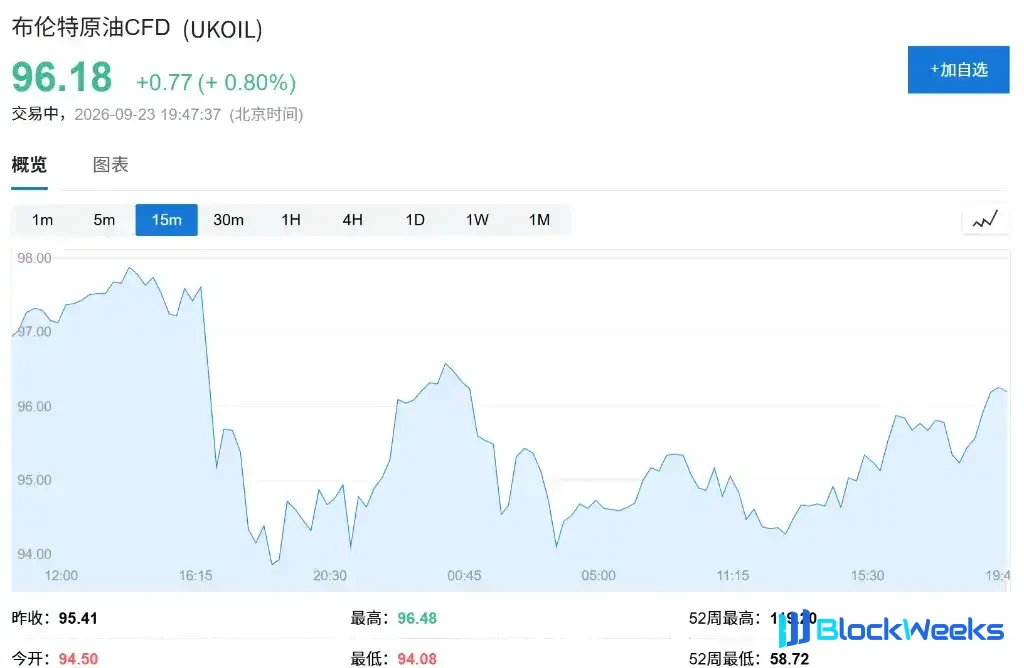
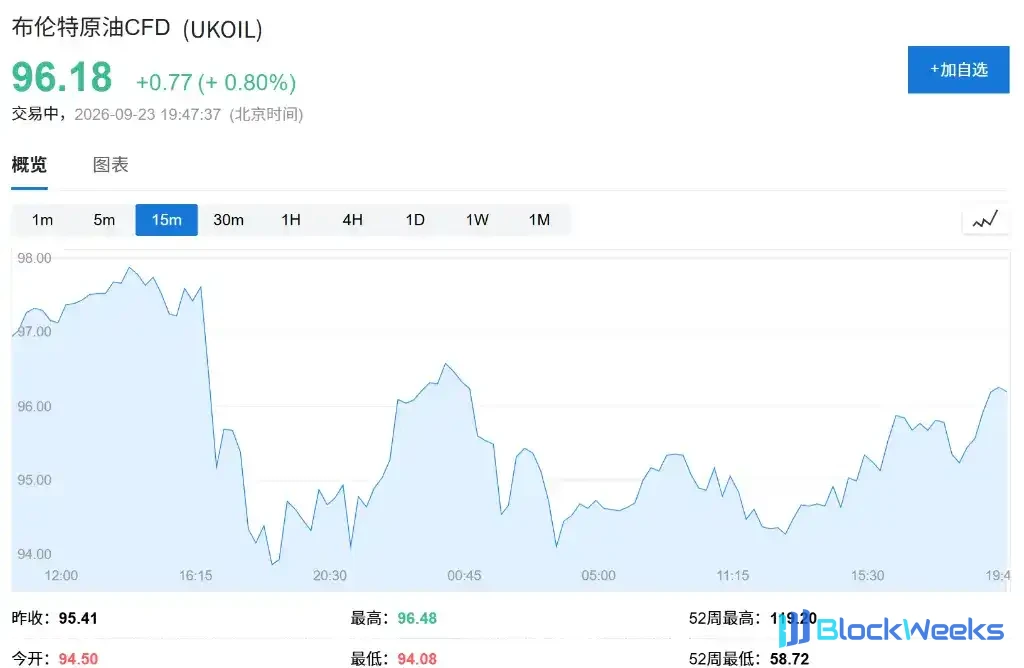
The U.S.-Iran situation continued to dominate market sentiment. According to CCTV News and Xinhua News Agency, at the request of the U.S. side, U.S. and Iranian representatives held a 3-hour long talk at the United Nations General Assembly and prepared for follow-up meetings. In his speech at the UN General Assembly, Trump said he faces a major choice—either reach an agreement with Iran to end the war or "quickly destroy Iran," while also stating he believes the two sides will reach an agreement after the midterm elections. Previously, he had said U.S. officials held "very smooth" talks with Iranian envoys. Brent crude rose 1.0% intraday to $96.37/barrel.
- The three major U.S. stock indices opened lower collectively, with the Dow down 0.18%, the S&P 500 down 0.11%, and the Nasdaq down 0.13%. Popular tech stocks were mixed, with Meta up 1.13%, SK Hynix down 1.57%; IONQ shares rose 13%, the largest intraday gain since July 30.
- The dollar index rose for a fourth consecutive trading day, up 0.1%.
- The yen fell 0.1% to 157.56 per dollar.
- Australia's 10-year government bond yield fell 6 basis points to 5.24%.
- Brent crude rose 1.0% intraday to $96.37/barrel.
- Spot gold fell below the $4,300/oz mark, at $4,299.92/oz.
- Bitcoin rose more than 1% to about $87,200.
Oil prices fluctuate, stocks fall into wait-and-see
Brent crude fluctuated widely around $99.50 per barrel, with neither bulls nor bears able to establish clear dominance. Nasdaq 100 index futures hovered near record highs, S&P 500 futures changed little, and European and Asian regional benchmark indices also lacked upward momentum.
Emma Moriarty of CG Asset Management said: "Stock market risk appetite, as well as the outlook for interest rates and inflation, will largely fluctuate with oil price expectations and trends. Brent has fallen, but the overall price level is still high and may need to fall further."
From a technical perspective, the MSCI All Country World Index is rebounding from support, market breadth still has considerable room to expand, and overall it presents a positive signal.
In other assets, the Bloomberg Dollar Index rose for a fourth consecutive trading day, up 0.1%. Investors are closely watching remarks by Fed Governor Michael Barr, after another official warned that inflationary pressures may persist. Gold fell 0.4% to about $4,345 per ounce, while Bitcoin rose more than 1% to about $87,200.

Economic Data Diverge, Eurozone Surprisingly Bright
Against the backdrop of a relatively light economic calendar this week, S&P Global on Wednesday released preliminary September manufacturing and services purchasing managers' indexes. Both U.S. readings are expected to remain consistent with a solid growth trend.
The eurozone, meanwhile, delivered an unexpected surprise. Boosted by a better-than-expected improvement in services, eurozone private-sector activity expanded at the fastest pace in more than three years. The S&P Global eurozone composite PMI rose to 53.1 from 52 in August, clearly above the 50 mark separating expansion from contraction.